Choosing the right weight distribution hitch (WDH) can dramatically improve stability, steering, and braking when towing. The best adjustable WDHs distribute tongue weight across the tow vehicle and trailer, reduce sway, and adapt to different trailer sizes and road conditions. This guide reviews five top models to help American buyers compare strength, sway control, and ease of setup. Each product section includes key features, so you can match performance to your towing needs.
| Product | Brand | Capacity (GTW) | Shank Size | Ball Size |
|---|---|---|---|---|
| CURT 17063 Round Bar Weight Distribution Hitch | CURT | 10,000–14,000 lbs | 2-In | 2-5/16-Inch |
| VEVOR Weight Distribution Hitch | VEVOR | Up to 14,000 lbs GTW | 2-In | 2-5/16-Inch |
| CURT 17500 TruTrack 4P WD Hitch | CURT | Up to 10,000 lbs | 2-In | 2-5/16-Inch |
| CURT 17601 TruTrack 2P WD Hitch | CURT | Up to 10,000 lbs | 2-In | 2-5/16-Inch |
| Reese 49912 Pro Round Bar WD Hitch | Reese | Up to 8,000 lbs | 2-5/16-Inch Ball | 2-5/16-Inch |
CURT 17063 Round Bar Weight Distribution Hitch

CURT 17063 is designed for level towing with a built-in sway control bar. It distributes tongue weight to balance the trailer and vehicle, helping maintain stable steering and braking. A continuous lubrication system with two grease zerk fittings supports quiet operation. The forged steel spring bars and a robust head construction deliver reliable strength for trailers within its 10,000–14,000 lbs gross weight range and 1,000–1,400 lbs tongue weight. The 2-5/16-inch hitch ball aligns with most standard trailers, and the integrated lubrication reduces maintenance needs over time. This model is well-suited for seasoned tows requiring consistent performance across varied road conditions.
VEVOR Weight Distribution Hitch

The VEVOR WD hitch provides a high-capacity option with up to 14,000 lbs gross trailer weight and 1,400 lbs max tongue weight using a 2-5/16-inch ball. Its four-point sway control system uses friction to counteract side-to-side movement for steadier highway towing. The kit typically includes a 2-inch shank and a 2-5/16-inch ball, enabling compatibility with many trailers, RVs, and boat haulers. This model emphasizes stable weight distribution to enhance steering and braking, especially on longer trips or in gusty wind conditions. It’s built for versatility and is often favored by owners with varied trailer types.
CURT 17500 TruTrack 4P WD Hitch
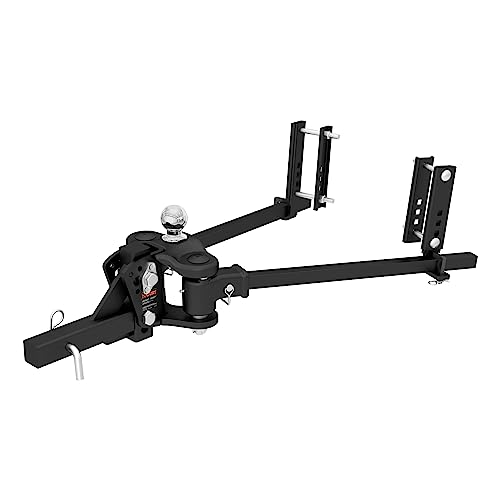
The CURT 17500 TruTrack 4P introduces an active sway control system that actively resists trailer sway at four points. It uses a spring and cam arrangement with fixed support brackets to deliver a smoother ride and stronger sway resistance. A precise weight distribution profile levels the tow vehicle and trailer, using 35-9/16-inch trunnion springs for robust balance. Setup is designed to be fast and intuitive; a tilting head with hex castle nuts simplifies adjustments without full disassembly. This model is well-suited for longer, heavier trailers where sway control is critical for safety and stability.
CURT 17601 TruTrack 2P WD Hitch

CURT 17601 combines TruTrack’s sway reduction with a streamlined two-point system. It emphasizes integrated sway control to minimize trailer movement, delivering precise weight distribution for improved vehicle alignment. The hitch uses round spring bars and a highly adjustable 7-hole shank that fits a 2-inch receiver. A tilting head supports quick adjustments, allowing fine-tuning without taking apart the hitch. This setup is ideal for owners who value precise leveling and easier maintenance during frequent towing scenarios.
Reese 49912 Pro Round Bar WD Hitch

Reese 49912 Pro Round Bar WD Hitch offers an 8,000-pound capacity with an included head, preinstalled 2-5/16-inch hitch ball, tapered spring bars, and a deep 8.5-inch drop shank. Its durability stems from a high-strength steel head and welded hitch bar, delivering reliable performance for mid-size trailers and standard consumer loads. The kit includes all necessary hardware for straightforward installation and setup. This model balances strength and simplicity, making it a practical choice for owners seeking dependable sway control and wobble reduction with steady handling on highways and backroads alike.
Buying Guide
Key purchase considerations help ensure you pick a WD hitch that fits your trailer and vehicle. First, weight capacity matters: match GTW and tongue weight ratings to your trailer’s loaded weight to prevent overloading. Second, sway control type matters: active systems aggressively counter sway, while passive or friction-based systems offer steady performance with lower maintenance. Third, shank and ball compatibility should align with your receiver size (commonly 2 inches) and your trailer ball size (most use 2-5/16 inches). Fourth, lubrication needs influence maintenance; integrated lubrication reduces service intervals but requires proper access for grease fittings. Finally, ease of setup and adjustment affects long-term use; look for tilting heads, easy-access adjustments, and clear alignment indicators for faster hitching and unhitching.
- Load distribution and vehicle balance: A good WD hitch should redistribute tongue weight across both axles for stable handling under various speeds and terrains.
- Stability vs. ease of use: Active sway control offers stronger sway resistance, but some owners prefer simpler, friction-based systems for lighter trailers.
- Durability and materials: Fabricated steel components with forged spring bars tend to last longer under heavy use and rough road conditions.
- Maintenance needs: Hitches with integrated lubrication minimize noise and friction but require routine grease care to maintain smooth operation.
- Installation footprint: Some models emphasize quick setup with tilting heads and fewer disassembly steps, which is beneficial for frequent hitching.
Choosing the right adjustable weight distribution hitch depends on trailer weight, towing frequency, road conditions, and whether sway control should be highly proactive or more gradual. For higher-capacity needs, models with active sway control and robust spring bars offer enhanced stability. For lighter to mid-range trailers, simpler designs with reliable sway control and ease of setup can provide consistent, safe handling. Always verify compatibility with your trailer’s hitch ball, receiver size, and mounting points before purchase.