Choosing an aluminum mobility carrier can simplify transporting wheelchairs and scooters on family trips, hunting expeditions, or daily commutes. Aluminum models offer lighter weight, corrosion resistance, and easy maintenance while delivering the strength needed for heavy loads. The following selections focus on 500 lb capacities, 2″ receiver compatibility, and ramps engineered for dependable loading and unloading. This guide presents five top performers and a practical Buying Guide to help you compare features, fit, and safety considerations for American road use.
| Product | Brand | Capacity | Receiver | Ramp Length | Highlights |
|---|---|---|---|---|---|
| MaxxHaul 50945 | MAXXHAUL | 500 lb | 2″ Class III/IV | 47″ | Large cargo basket with ramp, universal hitch compatibility |
| VEVOR Hitch Mount Carrier | VEVOR | 500 lb | 2″ | 48.03″ | Folding ramp, stabilizer, straps |
| Goplus 50″x29.5″ | Goplus | 500 lb | 2″ | 41.5″ | Lightweight aluminum; easy assembly |
| MaxxHaul 70275 | MAXXHAUL | 500 lb | 2″ | 60″ | Folding ramp; wide carrier bed |
| MaxxHaul 80779 | MAXXHAUL | 500 lb | 2″ | 47″ | High side rails; rust-resistant aluminum |
Below is an in-depth look at five top aluminum mobility carriers. Each product section includes a concise description, key features, and how it lends itself to reliable transport of scooters and power chairs. All information reflects the listed features and typical use cases for American consumers.
MaxxHaul 50945 Aluminum Hitch Mount Carrier

The MaxxHaul 50945 is a broad cargo basket designed for 2″ x 2″ Class III and IV hitch receivers. Its outer dimensions measure 50″ by 29-1/2″ by 8-3/4″, with inner loading space around 49″ by 27-3/4″ by 7-1/2″, offering substantial room for mobility devices or associated gear. The carrier supports up to 500 pounds of total weight, making it suitable for most scooters and wheelchairs with proper securing. A ramp integrated into the design enhances loading convenience, and the hitch tightener helps minimize movement during transit.
Key considerations: installation is straightforward on compatible hitch receivers, and the large platform helps distribute weight evenly. Regular maintenance includes inspecting the ramp and tie-down points for wear and ensuring fasteners remain tight after use. This model suits larger loads or families needing extra cargo space beyond a standard roof rack.
VEVOR Mobility Carrier With Folding Ramp

VEVOR’s hitch-mounted mobility carrier emphasizes ease of use with a foldable ramp, a substantial interior area of 48.03″ by 27.87″, and a robust 500 lb load capacity. The carrier includes a U-shaped bolt lock stabilizer and four ratchet straps to keep loads secure during transit, addressing common concerns about movement and wobble on long trips. A folding design reduces the need to disassemble equipment after each outing, though it’s recommended to lock the ramp with a pin before folding to ensure stability.
What to watch for: ensure your vehicle’s hitch rating aligns with the weight of both the carrier and its cargo, and verify that the ramp and stabilizing components receive regular inspection to prevent wear. The fold-and-go feature is particularly helpful for travelers who need quick setup and packing, with safety hinges and latching mechanisms contributing to reliable operation.
Goplus 50″x29.5″ Aluminum Carrier With Ramp
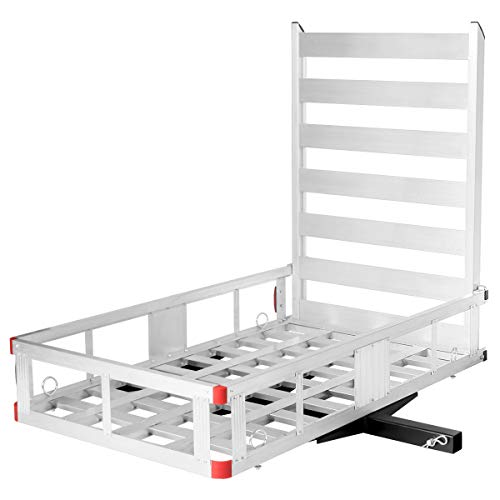
The Goplus 50″x29.5″ aluminum carrier balances weight and capacity, delivering up to 500 pounds on a platform designed for quick loading via a 41.5″ ramp. Weighing around 40 pounds, it remains relatively light for an aluminum carrier while maintaining structural integrity. Compatible with Class III or IV 2″ receivers, this model is positioned as a versatile option for trucks, SUVs, or vans and emphasizes easy assembly with three main components. It’s well-suited for scooters, wheelchairs, and other bulky cargo that benefits from a broad loading area.
Practical tips: check that your vehicle supports the combined weight of the carrier and cargo, and ensure the ramp is fully secured when not in use. The aluminum frame resists rust, which is beneficial for frequent outdoor exposure or winter driving conditions.
MaxxHaul 70275 Aluminum Carrier With Folding Ramp

The MaxxHaul 70275 brings a slightly longer ramp option and an expansive carrier bed to accommodate larger mobility devices. With overall dimensions of 53.5″ L x 29.75″ W x 8″ H and an interior space of 46.5” L x 28” W x 7” H, the cargo area supports up to 500 pounds. The 2″ x 2″ receiver fits Class III and IV systems, and the design includes an extra-wide loading region to help position equipment more easily. This model emphasizes a balance between payload capacity and maneuverability for everyday road use and occasional long trips.
Buyer considerations: confirm the ramp length and loading height fit your vehicle’s trunk or hatch clearance, and ensure tires or wheels don’t extend beyond the carrier edges during transport. Maintain a routine of inspecting rust-prone joints and lubricating moving parts to maximize longevity.
MaxxHaul 80779 Aluminum Carrier With High Side Rails

The MaxxHaul 80779 combines universal hitch compatibility with 500 lb capacity and enhanced security through a robust aluminum frame and high side rails. The platform measures 50″ by 29.5″ with a 47″ ramp, providing substantial loading space while maintaining a manageable weight. The design emphasizes durability and ease of maintenance, including rust resistance and secure anchor points to help keep loads stable on the highway. It remains a practical choice for users who frequently haul larger mobility devices and require consistent performance across trips.
Considerations: heavier high-side configurations may demand careful alignment during loading; use tie-downs and ramp locks to prevent movement. Periodically inspect the anchor points and safety rails for signs of wear and corrosion, particularly after exposure to road salt or heavy rain.
Buying Guide: Key Considerations And Comparisons
- Weight Capacity: Most aluminum carriers in this category support 500 pounds. Verify the weight of the mobility device with battery and accessories to ensure safe loading. Some models offer slightly higher weight margins, which can be useful for larger scooters or power chairs.
- Receiver Compatibility: All listed options fit standard 2″ Class III or IV receivers. Confirm your vehicle’s hitch class and ensure the combined weight of the carrier and cargo does not exceed the hitch’s rating or the vehicle’s gross towing weight.
- Ramp Design And Length: Ramp length ranges from about 41.5″ to 60″. Longer ramps reduce the slope, making loading easier for many users, but they can add to the overall length of the setup. Consider parking space, trunk clearance, and driveway slope when choosing ramp length.
- Material And Durability: Aluminum carriers resist rust and are lighter than steel options, facilitating installation and removal. Look for carriers with powder-coated frame components and robust anchorage points to protect against vibration and road debris.
- Security: Look for stabilizer bolts, anti-wobble devices, and tie-down strap systems. These features help prevent shifting or detachment of the mobility device during transit.
- Storage And Convenience: Folding ramps and collapsible designs simplify storage when the carrier is not in use. Ensure the ramp can be secured or locked when parked for extended periods.
- Vehicle Fit And Access: Ensure the carrier does not obstruct rear doors, hatch access, or tail lights. Measure cargo length and vehicle clearance to avoid interference with doors or trunk space.
- Maintenance: Regularly inspect anchor points, ramps, pins, and securing hardware. Clean aluminum surfaces to prevent corrosion and check for any signs of stress or deformation after heavy use.
- Warranty And Support: Check manufacturer warranties and service availability in the event of damage or hardware wear. A robust warranty can offer long-term value for frequent travelers.
In summary, aluminum mobility carriers provide a durable, lighter-weight solution for transporting scooters and wheelchairs. When choosing among models, compare ramp length, overall footprint, weight capacity, and security features. The five options highlighted here balance capacity and ease of use, helping consumers select a carrier that matches vehicle compatibility and travel needs.