The best blind spot alert system helps you detect nearby vehicles in adjacent lanes and behind you, making lane changes safer. This guide profiles five top options and explains who each is best for, plus practical buying tips. Ideal for new drivers, safety-focused commuters, and vehicle owners upgrading a factory setup, these systems aim to reduce lane-change risks with real-time warnings. Below is a quick summary table of the selected products to compare at a glance.
| Product | Best For | Detection Tech | Notes |
|---|---|---|---|
| EASYGUARD EBS001 | Budget-friendly car owners; daily drivers | 6–12 m range, LED indicator, 24 GHz | Lane change alert with buzzer option |
| BlueDex Blind Spot Monitoring System | Versatile R&D enthusiasts; wider awareness | 24 GHz millimeter wave radar; LED and buzzer | Multi-mode alerts; installation tools included |
| Wilove Blind Spot Monitoring System | Compact cars; simple ultrasonic sensing | 58 kHz ultrasonic sensors; LED warnings | Clear lane-change cues; short-range monitoring |
| BY-J 77 GHz Blind Spot System | All-weather reliability; trucks and SUVs | 77 GHz millimeter wave radar; LED + buzzer | Strong range; multi-function warning features |
| INNOVV ThirdEYE Motorcycle BSD | Motorcyclists and e-bikes; riders needing peripheral cues | 77–79 GHz radar; voice and LED indicators | Wide field detection; motorcycle-specific design |
EASYGUARD EBS001 Car Blind Spot Monitor System

The EASYGUARD EBS001 offers a compact blind spot detection setup that assists when changing lanes. It uses a range of 6–12 meters and activates a flashing LED indicator if a moving object is detected in the blind zone. This system is best for drivers seeking a budget-friendly option that still provides clear visual alerts. Best for everyday sedans and compact cars where a simple installation is preferred. A limitation is that audible warnings may be less pronounced in noisy cabins compared to systems with a continuous buzzer; use this if you primarily rely on the LED cue.
Astibym Blind Spot Detection Monitoring System

The Astibym BSD Kit uses real-time alerts with sound and light when vehicles intrude the blind zone. It features wide radar monitoring, multi-function safety support including lane change warning and rear traffic alerts, and a flexible design that helps drivers respond earlier to nearby movement. Best for drivers who want a robust feature set beyond basic BSD, including rear traffic awareness. Limitations include the need for proper calibration to ensure accurate detection around tight cargo or complex vehicle geometries.
BlueDex Universal BSD Sensor Kit

BlueDex provides a universal DC12V BSD kit using 24 GHz radar with a detection range of 1–32.8 ft. It offers multi-mode alerts that respond to turn signals as well as continuous warnings for lane changes. This system is well-suited for drivers who want a high-visibility indicator with flexible alert behavior. Choose this if you drive in busy traffic or require precise lane-change prompts. A potential drawback is the installation complexity for non-professionals; refer to the manual and alignment tools for optimal setup.
Wilove Car Blind Spot Monitoring System

Wilove uses 58 kHz ultrasonic sensors to detect objects in the blind zone up to about 0–5 meters. The LED indicators provide a clear signal when a vehicle enters the blind zone, and the buzzer adds an audible alert. Best for budget-conscious buyers and vehicles where simple ultrasonic BSD is sufficient. It is less effective for longer-range detection or higher-speed traffic on wide highways; consider this if your primary driving is urban with nearer blind spots.
BY-J 24GHz/77GHz Blind Spot System

The BY-J BSD system uses 24 GHz or 77 GHz radar depending on the model and offers multiple warning modes. It combines LED indicators, a buzzer, and lane change assist features. Best for drivers needing a more advanced radar-based system with broad coverage and functions such as lane-change aid and door warnings. A possible limitation is that higher-end models may require careful mounting and calibration to avoid false alarms in heavy traffic or on uneven roads.
BY-J 77 GHz Radar Blind Spot System
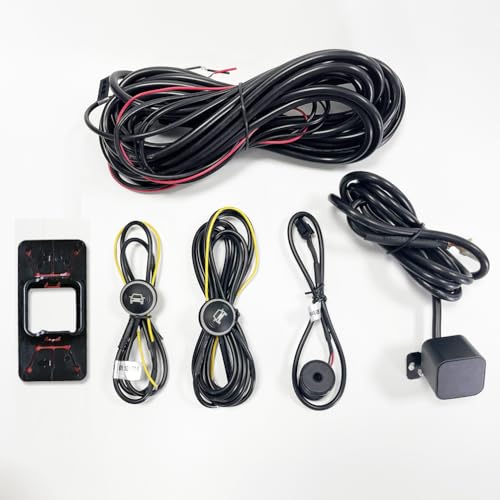
Another BY-J model uses 77 GHz radar for improved sensitivity and range in diverse weather. It highlights warning via LED flashing and buzzer alerts, with a focus on high detection accuracy in challenging conditions like rain or fog. Best for drivers who want strong nighttime or poor-weather performance. Limitation: higher-cost components and more complex installation compared to low-frequency ultrasonic systems.
INNOVV ThirdEYE Motorcycle BSD
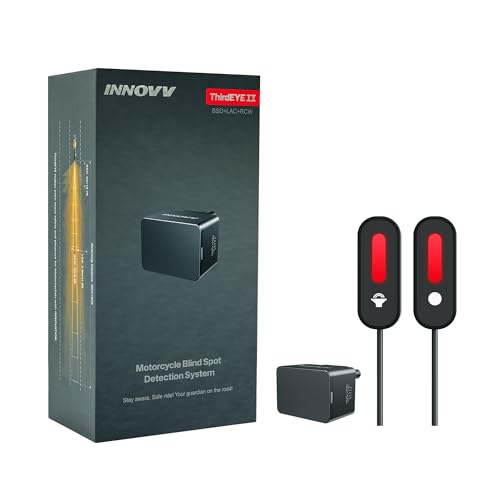
The INNOVV ThirdEYE BSD is tailored for motorcycles, scooters, and e-bikes. It provides voice alerts and LED indicators with a wide detection angle up to 150°, delivering early warnings to riders in fast-moving traffic. Best for riders who want periphery awareness without leaning heavily on mirrors. A consideration is that motorcycle-specific systems may require different mounting and wiring than car BSD units, so ensure compatibility with your bike’s electrical setup.
Buying Guide: Key Considerations For Selecting A Blind Spot Alert System
- Vehicle type and installation: Choose a system compatible with your vehicle’s power system (12V DC is common) and your willingness to install or pay for professional installation.
- Detection range and technology: Radar-based 24–77 GHz systems generally offer longer range and reliability in varying weather; ultrasonic systems are simpler and cost-effective but shorter-range.
- Alert methods: Visual LED indicators, audible buzzers, or voice alerts. Multi-mode systems switch between alerts when indicators or signals are used, such as turn signals.
- Number of sensors and coverage: Some kits monitor both sides and the rear; others focus on one side. Consider whether you need rear traffic alerts or door-open warnings as well.
- Weather and lighting performance: Evaluate performance in rain, fog, snow, or darkness. Higher-frequency radars tend to be more reliable in adverse conditions.
- Ease of calibration and maintenance: Look for systems with straightforward alignment tools and clear manuals to reduce setup time and false alarms.
- Intended user: Car owners may prioritize ease of use, while motorcyclists may require compact, helmet-friendly indicators and voice cues.
FAQ
- What is a blind spot alert system?
A blind spot alert system uses sensors to detect vehicles in adjacent lanes and behind you, then provides warnings through LEDs, sounds, or voices to aid lane changes.
- Do I need professional installation?
Many kits are designed for DIY installation with basic tools, but some systems with complex sensor placement may benefit from professional setup.
- Which technology is best for all-weather use?
Radar-based systems, especially 24 GHz and 77 GHz models, generally perform better in rain, fog, and poor lighting than ultrasonic sensors.
- Can blind spot systems help with parking?
Yes, several models include rear traffic alerts and parking aids that assist during reversing and tight maneuvers.
- Are there privacy concerns with these systems?
BSD systems rely on sensors and indicators; there are no inherent privacy concerns beyond standard data collection during vehicle operation.
- How do I choose between LED alerts and audible alerts?
LED alerts provide non-disruptive warnings, while audible alerts are more noticeable in noisy environments; multi-mode alerts can combine both.