Finding the right hitch-mounted bike carrier involves weighing capacity, compatibility, and load stability. This guide profiles five top options designed for cars, trucks, SUVs, and even RV setups. Each product supports multiple bikes, accommodates fat tires up to 5 inches, and offers features like tilt functions, anti-wobble designs, and easy-loading ramps. Read on to compare models and choose the best fit for your vehicle and cycling needs.
Summary of chosen products
Product
Key Feature
Capacity
Young Electric E-Bike Rack with Ramp
V-groove ramp for easy loading; anti-wobble design
The Young Electric E-Bike Rack with Ramp is designed for two bikes, with a combined capacity up to 200 pounds. It features a V-groove ramp for straightforward loading of e-bikes or heavier bikes, compatible with 5-inch tires and wheelbases up to 50 inches. The 2-inch receiver fit means broad vehicle applicability. An upgraded anti-wobble bolt system and semi-enclosed support blocks enhance stability, while padded contact points protect bike finishes during transport. Installation is facilitated by user manuals or an e-manual for quick setup.
References to its features emphasize a balance between strength and protection: ratchet strap loading for each bike reduces reliance on exposed hooks, and protective padding minimizes scratches. This makes it a solid option for riders with heavy electric bikes or fat-tired mountain bikes, seeking dependable stability without complex installation steps.
Allen’s Deluxe 4-Bike Hitch Mount Rack fits a 2-inch receiver and provides a patented tie-down cradle system that secures each bike individually. The carry arms fold when not in use, and the rack tilts back to allow rear-access through a hatch or trunk. A no-wobble bolt helps minimize movement inside the hitch, while retaining clips are attached with lanyards to prevent parts loss. Minor assembly is required, and the black powder-coated finish helps resist corrosion and wear. This model emphasizes simplicity and durability for families with multiple bikes.
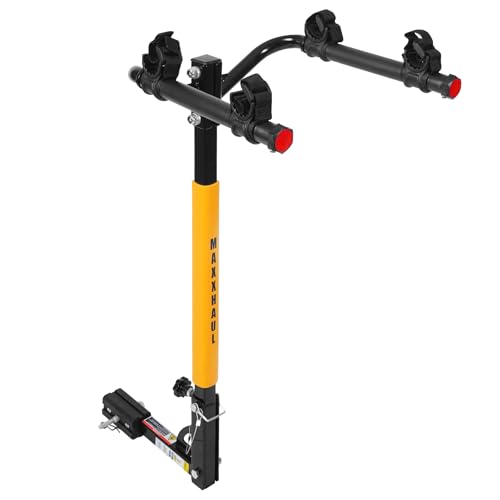
MAXXHAUL’s 50025 offers broad compatibility through a hitch adapter compatible with 1-1/4″ and 2″ receivers, across Class I to IV hitches. It securely transports up to two bikes with reinforced rubber cradles and buckle-type straps designed to hold bikes steady during travel. Easy installation is highlighted, and the product includes a hitch pin for secure attachment. The design focuses on versatility and dependable transport, suitable for a wide range of vehicles—from compact cars to larger SUVs and trucks.
PacificCrest Bike Rack Hitch
The PacificCrest hitch rack is built for rugged use with anti-rattle technology and a foldable, tilt-away design. Its high-strength construction protects carbon frames while staying quiet on the road due to padded contact points that reduce noise and vibrations. The tilt-away feature provides convenient trunk access even when bikes are loaded, making it ideal for road trips or weekend excursions. It is specifically designed for 2-inch hitch receivers and supports up to two bikes with up to 5-inch fat tires.
This Young Electric platform-style rack carries up to four bikes with a total capacity of 160 pounds. It includes soft padded hooks and a locking hitch pin to prevent swaying and scratches. The rack folds and tilts to facilitate trunk access without detaching the bikes, fitting most SUVs and minivans. The design accommodates bikes with diverse frame sizes, and supports a wide range of wheelbases and wheel sizes, making it a versatile choice for households with multiple riders.
This Young Electric model focuses on a robust 200-pound total capacity, suitable for two e-bikes or two heavier bikes. It offers reinforced steel and aluminum construction, a two-arm fix, patent wheel cradles, and an anti-wobble structure to keep bikes stable. The rack is RV-approved for highway use and motorhome adventures, emphasizing reliability on long trips and rough roads. It’s designed to fit 2-inch receivers and can handle fat tires and standard bikes with minimal sway.
Buying Guide: Key Purchase Considerations
Vehicle compatibility: Verify your hitch size (2-inch is most common) and whether the rack fits Class I–IV hitches. Some models provide adapters for multiple sizes, increasing flexibility across a family fleet.
Capacity and weight distribution: Total weight capacity should cover the combined weight of all bikes. Consider whether you need to transport two e-bikes, three mountain bikes, or four children’s bikes. Check per-bike limits and wheelbase allowances for your tires and frames.
Bike security and frame protection: Look for padded contact points, soft hooks, anti-sway features, and locking hitch pins. Anti-wobble systems reduce movement, protecting both bikes and your vehicle’s hitch.
Loading and access features: Ramps, tilting designs, and foldable racks influence convenience. A ramp simplifies loading heavy e-bikes, while tilt-back designs enable trunk access without detaching bikes.
Fat tire and wheel compatibility: If you ride fat-tire bikes, confirm tire width support (up to 5 inches is common). Ensure wheelbases (distance between front and rear wheels) fall within the rack’s range to avoid contact or instability.
Durability and weather resistance: Powder-coated finishes resist corrosion, especially if you frequently drive in rain, snow, or salted roads. Look for rugged materials that maintain performance over time.
Security features: Consider racks with enhanced locking mechanisms or integrated security cables to deter theft when parked at destinations.
Installation and maintenance: Simple assembly, intuitive adjustments, and accessible manuals (including digital guides) save time and reduce the risk of misalignment during use.
Vehicle access and storage: Some racks swing down or fold flat when not in use, improving access to trunks and tailgates. Check whether the rack stores compactly for garages or long-term storage.
RV and specialty use: If traveling in RVs or towing-heavy setups, ensure the rack is RV-approved or specified for alternative vehicle configurations to ensure continued safety on the road.
In summary, the best car hitch bike carrier combines strong weight capacity, stable mounting, and adaptable loading features. When selecting, prioritize those that match your typical bike types, vehicle hitch size, and travel habits. This approach ensures secure transport, reduced wear on bikes, and convenient access during trips.