Protecting a vehicle’s underbody from moisture, salt, and road debris is essential for longevity. The following rust treatments are among the most effective options available for American homeowners and professionals. This guide highlights top products, how they work, and how to choose the right solution for your undercarriage needs.
| Product | Brand | Key Benefit |
|---|---|---|
| POR-15 Rust Preventive Coating | POR-15 | Impenetrable barrier, moisture curing, UV-stable finish |
| Zenex Rubberized Undercoat | Zenex | Waterproof, flexible, sound-deadening |
| Krown Rust Inhibitor | Generic | Self-healing, long-lasting protection |
| Corrosion Free Rust Cure Formula 3000 (1 Gallon) | Corrosion Free | Odorless, no-drip, penetrates hidden areas |
| Eastwood Internal Frame Coating Aerosol | Eastwood | Rust prevention and rust destroyer in one spray |
The following sections provide concise, objective overviews of each product, with a focus on how they protect undercarriage components from rust and corrosion. All options are designed to be applied to metal surfaces exposed to moisture, salt, and road grime, helping extend vehicle life and maintain structural integrity.
POR-15 Rust Preventive Coating
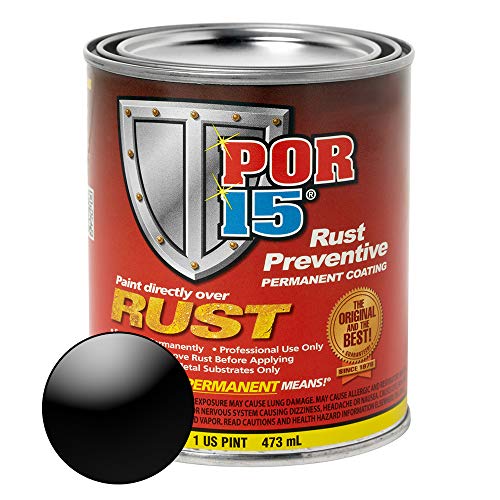
POR-15 is widely regarded as a high-performance coating for metal surfaces. It forms an impenetrable barrier that stops rust by isolating metal from water, chemicals, salt, and other corrosive elements. The product cures with moisture, which can yield a hammer-tough finish once fully cured. The coating is commonly used in conjunction with a 3-Step Stop Rust System to maximize protection. For best results, surface preparation involves degreasing, etching, and applying multiple thin coats. Topcoat when ultraviolet exposure is expected, since POR-15 can be UV-sensitive without a protective top layer.
Zenex Rubberized Undercoat

Zenex Rubberized Undercoat provides a durable, flexible, waterproof barrier that shields underbody components from moisture and road contaminants. The finish remains elastic across temperature changes, reducing the risk of cracking or peeling. It also offers sound-deadening benefits, helping to quiet the ride on rough roads. While primarily used on underbody areas, the coating can be painted over for a finished look. For installation, shake well, apply in thin coatings, and allow proper curing between layers to avoid pooling or sagging.
Krown Rust Inhibitor

Krown Rust Inhibitor creates a long-lasting protective barrier that resists chipping and cracking, even in harsh conditions. The formula stays fluid to support a self-healing effect over abrasions, maintaining continuous rust prevention. It can be applied via spray, brush, or dip methods, making it suitable for DIY projects or professional automotive work. The product is designed for underbody protection as well as other exposed metal surfaces and is compatible with multiple finishing steps. Regular reapplication is recommended to sustain protection in severe environments.
Corrosion Free Rust Cure Formula 3000 (1 Gallon)

This formula forms a clear, non-drip barrier that actively stops existing rust and prevents new corrosion. It penetrates seams, joints, and cavities to protect hard-to-reach areas such as brake and fuel lines. The formula is odorless and free from toxic chemicals and VOCs, making it safer for indoor use and sensitive environments while maintaining structural integrity. Its undercoating performance is designed for extended protection on cars, trucks, tractors, and outdoor equipment often exposed to salt and moisture.
Eastwood Internal Frame Coating Aerosol

Eastwood’s Internal Frame Coating Aerosol serves as both a rust preventative and a rust destroyer. It coats the frame and inner chassis areas, helping to prevent rust formation while addressing existing corrosion. The product is designed for ease of use in tight spaces; users are advised to shake well before application and to use extension nozzles for hard-to-reach openings. This coating pairs with Eastwood’s broader line of undercoating products to deliver comprehensive frame protection and a renewed, cleaner appearance for metal surfaces.
Buying Guide: Key Purchase Considerations
- Surface preparation: Remove oil, grease, and loose rust; consider rust converters where appropriate before applying protective coatings to ensure proper adhesion.
- Protection type: Choose between barrier coatings (stops rust) and penetrating, self-healing formulas for ongoing maintenance; some products combine both approaches.
- Application method: Sprays are quick for large areas; brushes provide control for edges and corners; dips are useful for parts with multiple small components.
- UV exposure: Some coatings require topcoats or UV protection if the underbody is exposed to sunlight; consider UV-stable options for areas near wheel wells and underbody panels.
- Temperature and curing: Follow manufacturer guidance on curing times and temperatures; moisture-curing coatings can behave differently in humid environments.
- Odor and safety: Odorless formulas are preferable for indoor use; ensure adequate ventilation and personal protective equipment when applying solvent-based coatings.
- Durability vs. maintenance: Heavier-duty coatings offer longer intervals between reapplications but may require meticulous preparation; lighter coatings may be easier to reapply.
- Compatibility: Confirm compatibility with existing paints, primers, or sealants on the underbody; some products are designed to be top-coated, while others are self-contained.
- Long-term performance: Consider products with proven track records in harsh climates (winter road salt, coastal environments) for the best long-term protection.