Answering the buyer’s search for affordable SBC aluminum heads, this guide highlights five solid options and explains who each is best for. The focus is on lightweight aluminum heads with 200cc–205cc intake runners and 64cc chambers, designed for small block Chevy engines in classic hot-rod and muscle-car projects. These picks are suited for budget-conscious builders aiming to improve airflow, power, and overall top-end performance without costly aftermarket blocks.
| Product | Intake Runner (cc) | Chamber (cc) | Best For |
|---|---|---|---|
| Speedmaster Assembled 205/64 | 205 | 64 | Bolt-on upgrade for standard deck SBC blocks |
| IMOOA Bare Angle Plug 205/64 | 205 | 64 | Angle-plug design for space-limited layouts |
| VEVOR SBC Aluminum 205/64 | Unknown (205-ish common) | Unknown (64) | OEM-style replacement with CNC precision |
| Top End Combo Kit 205/64 | 205 | 64 | Complete bolt-on power package |
| Speedmaster PCE281.2009 205/64 | 205 | 64 | Assembled head for hydraulic roller cam setups |
Speedmaster Assembled SBC Heads With 205cc Intake

Best for: builders seeking a ready-to-install option with components already installed. These assembled heads include springs, retainers, locks, and valves, reducing assembly time. The 64cc chambers and stainless valves support compact chamber sizing while maintaining airflow and durability.
Why chosen: The combination of 205cc intake runners and pre-installed components offers a straightforward bolt-on upgrade for standard-deck Small Block Chevy engines. The design targets strong mid-range and top-end power without extra parts purchases.
Caution: Verify pushrod length and intake manifold port match before installation to avoid clearance issues with combinations not tested together.
IMOOA Angle Plug Aluminum Head 205/64

Best for: builders needing an angle spark plug design to fit tight engine bays or specific header/head clearance configurations.
Why chosen: This head uses an angle plug layout and 205cc intake with 64cc chamber, aligning with common SBC builds up to 1986. The solid valve sizes provide reliable airflow performance while staying within a budget range.
Caution: Confirm compatibility with your specific SBC era and manifold style, as some intakes and exhausts may require port matching.
VEVOR Aluminum SBC Head Assembly

Best for: buyers seeking a precise, purpose-built cylinder head replacement for common SBC models like 327/350/383 and Corvette variants.
Why chosen: CNC precision machining aims for smoother airflow and better sealing, with attention to valve heights and port alignment. The aluminum alloy supports heat dissipation and weight savings compared with iron heads.
Caution: This head is positioned as a replacement; verify that mounting holes, valve geometry, and seals align with your engine’s specifications to avoid fitment issues.
Speedmaster Top End Combo Kit SBC Heads Package
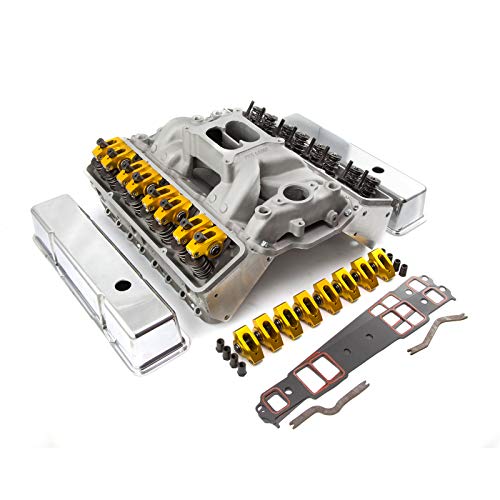
Best for: builders who want a complete bolt-on upgrade with heads, cam, lifters, pushrods, springs, and gaskets in one package.
Why chosen: The kit bundles a solid flat cam and matched components to deliver a cohesive power gain. It is tailored for standard-deck SBC blocks and aims to provide a 50–100+ HP increase over stock when properly tuned.
Caution: Verify piston-to-valve clearance after installing the new cam and heads, and plan for tuning to optimize performance with the included components.
Speedmaster PCE281.2009 205/64 Aluminum Heads

Best for: SBC 350 builds using hydraulic roller cams that require a ready-to-install aluminum head with a 64cc chamber.
Why chosen: The 205cc intake runner size supports strong airflow for increased horsepower at higher RPMs, making it a sensible upgrade for performance-oriented street and track motors.
Caution: Confirm compatibility with your cam profile and the valve train arrangement to ensure optimal valve operation and sealing.
Buying Guide: Key Considerations For SBC Aluminum Heads
- Intake Runner Size: Larger runners (around 200–205cc) improve mid-range and top-end power but may affect low-end torque. Choose based on street versus strip use.
- Combustion Chamber: 64cc chambers increase compression and power potential on smaller displacement SBC engines. Match chamber size to compression goals and piston crown design.
- Valve Train Compatibility: Confirm valve sizes, guide materials, and seat angles align with your chosen camshaft and lifter package to avoid clearance or sealing issues.
- Port Design and Matching: Ports should be matched to exhaust manifolds and intake manifolds. Check for proper port alignment and gasket fit between head and manifold.
- Overall Build Plan: Consider whether you want a complete bolt-on kit (heads with cam, lifters, pushrods) or a bare/assembled head to pair with your preferred components.
- Durability and Heat Management: Aluminum heads dissipate heat well but require good water jacket design and proper torque sequences. Ensure seals and valve seats are suitable for your power target.
- Installation Footnotes: Some heads require pushrod length verification and specific torque specs. Always refer to the manufacturer’s installation guidelines.
FAQs
- What is a good SBC head for budget builds?
– Aluminum heads with 205cc intake runners and 64cc chambers offer a balance of power and weight without overcomplicating the build. - Are assembled heads better for beginners?
– Assembled heads with springs and valves installed reduce the number of parts to buy and simplify initial setup, but verify compatibility with your cam and manifold. - Can these heads fit all Small Block Chevy engines?
– Most listed options target standard-deck SBC blocks and 265–400 small-block families. Always verify engine year, deck height, and valve-to-piston clearance. - Do I need to upgrade other components with aluminum heads?
– Depending on your build, you may need new springs, pushrods, or a compatible cam to maximize performance and ensure correct valve dynamics. - How does chamber size affect compression?
– A 64cc chamber increases static compression compared to larger chambers, influencing torque and peak HP when combined with appropriate piston and cam choices. - Is port matching necessary?
– Yes, proper port matching between the head, intake, and exhaust manifolds improves airflow and performance.