Choosing a dual plane intake manifold can enhance throttle response and overall performance for Chevy small block V8 engines. This guide highlights five top dual plane options that balance street drivability with torque for a range of SBC builds. Each model is evaluated for compatibility, RPM range, and material quality to help you compare performance gains without sacrificing daily usability.
| Product | Vehicle Range | Material | RPM Range | Notes |
|---|---|---|---|---|
| JGhyperX 2101 | Chevy Small Block 1955-1995 SBC | Aluminum | Idle-5,500 | Dual Plane; Complete intake, 4-barrel |
| JGhyperX 7561 | Chevy Big Block 1966-2000 BBC | Aluminum | 1,500-6,500 | Dual Plane; Complete intake |
| JGhyperX 7501 | Chevy Small Block 1955-86 SBC | Aluminum | 1,500-6,500 | Vortec/air-gap style dual plane |
| JGhyperX 2701 | Chevy Small Block 1955-86 SBC | Aluminum | Idle-5,500 | Dual Plane; Complete |
| Enocos 2701 | Chevy Small Block 1955-86 SBC | Aluminum | Idle-5,500 | Dual Plane; Complete |
Below are five select manifolds that stand out for dual plane performance and broad compatibility with common SBC builds. Each entry includes the official product name, engine compatibility, notable features, and RPM range to help you decide which manifold aligns with your vehicle’s power curve and daily usability.
JGhyperX 2101 Dual Plane Intake
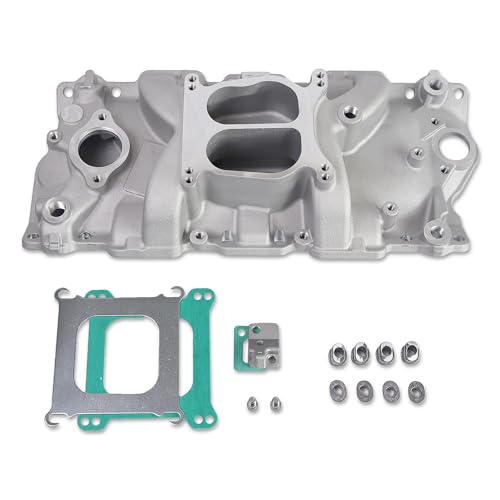
The JGhyperX 2101 is designed for Chevy Small Block engines from 1955 to 1995, covering a broad SBC range (262, 265, 267, 283, 302, 305, 307, 327, 350, 400). This aluminum dual plane manifold supports a 4-barrel carburetor and provides a compact height of 4.050 inches, aligning with standard deck heights. It targets idle-to-mid RPM performance with a basic operating range up to 5,500 RPM, making it suitable for mixed-use street applications where throttle responsiveness matters more than peak horsepower.
JGhyperX 7561 Air Gap Dual Plane

The JGhyperX 7561 is a dual plane intake for Chevy Big Block engines from 1966 to 2000, featuring an air-gap design that helps improve low-to-mid RPM torque. Aluminum construction provides a lighter weight option with a 5.220-inch manifold height. This manifold is compatible with 6.5L, 6.6L, 7.0L, and 7.4L V8 engines and is intended for complete installation with standard deck height. RPM range tends to favor street-driven big-block combinations seeking more midrange pull.
JGhyperX 7501 Vortec Dual Plane

The 7501 Vortec dual plane manifold is tailored for Chevy Small Block SBC engines (1955-86) and features a dual-plane design with a 4-barrel carburetor setup. The aluminum construction with a 4.650-inch manifold height aims to supply efficient air distribution at idle to mid-range rpm, improving throttle response in daily driving while maintaining compatibility with standard deck height blocks. It is offered in a polished/silver finish, appealing to aftermarket builds that prioritize both performance and aesthetics.
JGhyperX 2701 Dual Plane for SBC
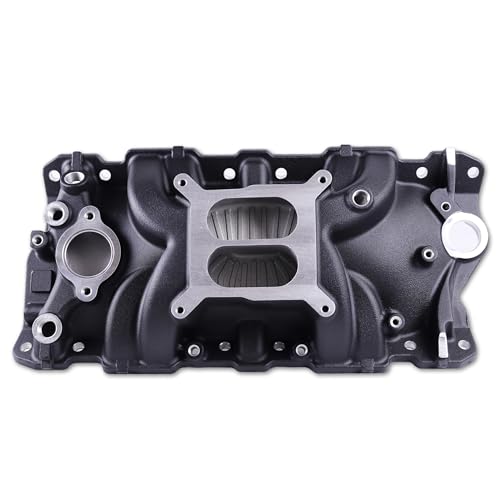
The JGhyperX 2701 is designed for Chevy Small Block engines from 1955-86, covering 262-400 V8 configurations. It employs a dual plane layout with a basic idle-to-5,500 RPM operating range and a compact 4.270-inch manifold height. The part notes indicate it is suitable for complete installation and standard deck heights, but users should verify hood clearance and carburetor compatibility, particularly on Corvette applications where stock hood clearance may be tighter.
Enocos 2701 Dual Plane for SBC

The Enocos 2701 is a Chevy Small Block dual-plane intake designed for 1955-1986 SBC engines with 262-400 V8 configurations. It features aluminum construction and a 4.270-inch manifold height, aligning with common SBC deck heights. The advertised benefits emphasize improved throttle response and air velocity through dual plenums, targeting a balanced blend of drivability and engine responsiveness for street performance builds.
Buying Guide: Key Considerations When Choosing a Dual Plane Manifold
Purpose and engine family: Most dual plane manifolds are built for SBC engines and vary by year range and deck height. Verify compatibility with your block, carburetor type, and hood clearance for your specific build.
Material and weight: Aluminum manifolds shed weight and reduce heat soak, which can improve throttle response and cold-start behavior. Steel options exist but are heavier and less common in street builds.
RPM and torque curve: Look at the advertised RPM range. Dual plane designs typically optimize low-to-mid RPM power for street driving, while some “air-gap” or performance variants may impact high-end power.
Carburetor compatibility: Ensure the manifold’s carburetor mounting is compatible with your 4-barrel or other carburetor setup (square bore vs spread bore). This affects gasket choices and installation hardware.
Deck height and hood clearance: Check the installed height and ensure your hood can close without interference. Some manifolds have taller profiles that may require hood or ignition system adjustments.
Quality and fitment: Look for complete intake assemblies with all gaskets, studs/bolts, and throttle linkage where applicable. Subtle differences in runner length or plenums can influence throttle response and fuel distribution.
Compatibility with performance upgrades: If you’re pairing with aftermarket cylinder heads, headers, or a performance cam, ensure the manifold’s runner design won’t restrict the intended power gains.