Answering the common buyer need for a reliable, easy-to-use fuel transfer kit, this guide highlights five top options that fit most light-duty tanks and automotive tasks. Each product is suited to different users: hobbyists and DIYers, boat and RV owners, or small-business operators who need quick, spill-safe transfers. The table below helps compare core ideas at a glance, followed by in-depth sections for each model.
| Product | Best For | Key Benefit |
|---|---|---|
| H-veenjor Gasoline Siphon Hose Pump | DIYers and emergency kits | High-flow 15mm hoses for faster pumping |
| BBjinronjy Siphon Pump | Time-savers and frequent transfers | Quick start and wide hoses for rapid flow |
| HORUSDY Multi-Use Siphon Kit | Boat, lawn care, and small engines | Long hoses for deep tanks and portable design |
| ZHSYMX Fuel Tank Sump Kit | Professional fuel system upgrades | Dual ports for integrated return or dual feeds |
| SMART JERRY Fluid Transfer Pump | All-purpose hand pump users | Tool-free setup and leak-resistant design |
H-veenjor Gasoline Siphon Hose Pump

The H-veenjor siphon pump uses a 15mm diameter hose with a built-in one-way valve to prevent backflow. It’s designed for speed and ease, with a lightweight 290g body and a clear pumping direction indicator. The setup requires placing the upper hose in the fuel tank and the lower hose in the receiving container, then squeezing to initiate flow. This model is best for occasional fuel transfers, water, oil, diesel, and even aquarium water in a pinch—though it should not be used for drinking water or edible oils.
Best for: Home and emergency use where quick transfers are needed without power. Ideal for car maintenance, small engines, or topping off fuel for outdoor equipment. Caution: not intended for drinking water or edible oils.
BBjinronjy Siphon Pump With Hoses

The BBjinronjy model features a fast-start siphon bulb and widened hoses (ID 11mm, OD 15mm) to push up to 3.5 gallons per minute. It emphasizes quick setup: insert the upper hose into the tank, squeeze to begin, and allow gravity to finish the transfer. Its components include a sturdy metal clamp and a built-in stop valve to curb backflow. It’s best for frequent transfers where time matters and the user works with gasoline or diesel in automotive or DIY contexts.
Best for: Users needing rapid fluid transfer with minimal effort. Choose this if you value speed and a wide hose for deeper tanks. Caution: ensure the fluid is compatible with the hose materials and avoid drinking-water scenarios.
HORUSDY Multi-Use Siphon Transfer Pump Kit
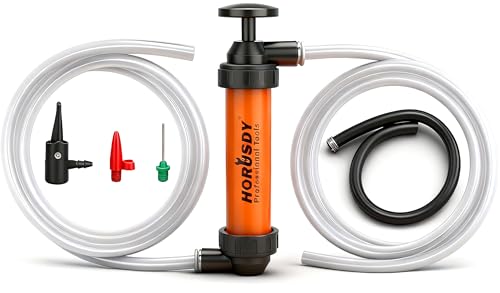
This kit includes two clear hoses (15/32 inch, 51 inches) and a black air hose, with a lock-on connector and adapters for easy carrying and storage. Its long hoses enable reach to deep tanks, making it practical for boats, lawn equipment, and small engines. It operates without electricity, which adds safety for fuel handling. The setup is straightforward, and the product aims for quick, safe transfers with minimal risk of leaks.
Best for: Boat decks, garages, or emergency kits where portability and reach matter. Caution: manual operation requires physical effort, and ensure compatibility with the fluids being transferred.
ZHSYMX Fuel Tank Sump Kit

The ZHSYMX sump kit is designed for compatibility with Airdog and FASS fuel pumps, aiming to enable integrated return lines or dual fuel feeds. It emphasizes a dual-port design and a reliable O-ring seal to minimize fuel leakage. This option is appropriate for users pursuing a more integrated or upgrade-focused approach to fuel delivery in larger systems such as Cummins, Duramax, or Powerstroke setups.
Best for: Professionals or enthusiasts upgrading fuel systems where dual feeds or a return line are desired. Caution: installation may require precise alignment and a compatible pump arrangement.
SMART JERRY Fluid Transfer Pump

SMART JERRY offers a tool-free assembly that claims setup in under 30 seconds. It transfers 2.7–3 gallons per minute under typical use, and features upgraded sealing to reduce leaks. This model emphasizes ease of use and reliable performance for lawn care, automotive maintenance, or RV antifreeze tasks. The design focuses on avoiding leaks and providing a straightforward user experience.
Best for: Users who want a quick, no-tools setup with solid leak prevention. Choose this if you value fast transfer without tool-heavy assembly. Caution: confirm compatibility with the fluids being transferred and follow the manual for proper assembly to avoid leaks.
Buying Guide
Key considerations when selecting a fuel tank drain kit include hose size, reach, and flow rate. Higher flow and longer hoses help with larger tanks and deep reservoirs, but may require more effort to manage without spilling. Material compatibility matters; ensure hoses and seals resist gasoline, diesel, and other common fuels. A built-in check valve reduces backflow, while a one-way design prevents cross-contamination. Portability and storage features matter for boat, RV, and garage use. Manual pumps require effort, but add safety by avoiding electricity near fuel.
What should I consider before buying a siphon kit?
- Tank depth and hole access: longer hoses are beneficial for deep tanks.
- Fluid type: ensure hose material and seals tolerate gasoline, diesel, or antifreeze.
- Flow needs: higher gallons-per-minute are useful for large transfers; slower flow can be safer for small containers.
- Portability: a compact kit is easier to store in a vehicle or workshop.
- Safety features: check for backflow prevention and leak-resistant seals.
How to use a fuel transfer siphon safely?
- Place the upper hose in the source tank and the lower hose in the destination container.
- Ensure hoses are secure and free of kinks; avoid spills by controlling the flow with the bulb or valve.
- Do not use with drinking water or edible oils; only with fuels and other compatible liquids.
- Work in a well-ventilated area and away from ignition sources.
Which kit is best for my scenario?
- Best for quick, occasional fuel moves: H-veenjor or BBjinronjy for fast start and high flow.
- Best for deep tanks and on-the-go use: HORUSDY with long hoses and portable design.
- Best for system upgrades: ZHSYMX for dual-port compatibility and enhanced sealing.
- Best for general, all-purpose handling: SMART JERRY for tool-free setup and leak resistance.
FAQ
- What is the typical flow rate for these siphon pumps?
Flow rates vary; examples include up to about 3.5 gallons per minute for some models, and around 2.7–3 gallons per minute in others, depending on hose size and pumping action.
- Can these kits handle water and diesel?
Many are designed for gasoline, diesel, and water, but always verify the manufacturer’s compatibility notes for each model.
- Do these pumps require electricity?
No electrical power is needed for manual siphon pumps, which enhances safety in fuel transfer tasks.
- Are these kits suitable for edible oils or drinking water?
No; these siphon kits are intended for fuels, oils, and similar liquids. Do not use for drinking water or edible oils.
- What maintenance is needed to prevent leaks?
Regularly inspect hoses, seals, and valves for wear; replace any cracked hoses or worn seals to maintain leak-free performance.