Answering the most common buyer question: which proportioning valve best balances front and rear brake pressure for disc/drum or disc/disc setups? The top picks below are suited for classic GM, Chevy, Ford, Buick, and street-rod builds, especially when upgrading from drum to disc or tuning brake bias. The featured models emphasize reliability, brass or aluminum construction, and compatibility with dual-reservoir master cylinders. The buyer types these sections serve best include hot-rodders, restoration enthusiasts, and DIY mechanics seeking improved rear brake stability without complex installs.
Summary table of selected products
| Product | Brand | Best For | Key Benefit |
|---|---|---|---|
| PV2 Brass Proportioning Valve Disc/Drum | POWERWORKS | Disc-front, drum-rear systems | Durable brass construction with universal dual-reservoir compatibility |
| PV4 Brake Proportioning Valve Disc/Disc | POWERWORKS | Disc-front, disc-rear systems | Solves rear lock-up by proportional pressure distribution |
| Labwork Silver PV2 Aluminum Valve | labwork | Chevy/GM classic builds | Aluminum, lightweight universal PV2 replacement |
| PV2 Brass Combination Valve (LDMINDA) | LDMINDA | Disc/drum, GM/ Chevy classic cars | Exact copy of original style with universal fit |
| PV4 Brass Valve (NPAUTO) | NPAUTO | Front disc, rear disc or drum setups | Universal PV4 with standard port sizes, flexible fit |
PV2 Brass Proportioning Valve Disc/Drum — POWERWORKS
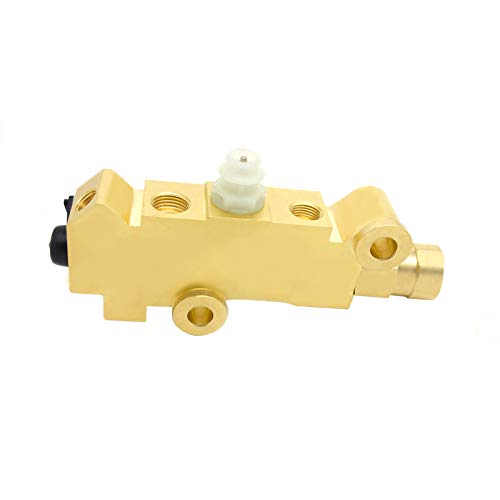
The PV2 valve is designed for most dual-reservoir master cylinders and features 1/2″ and 7/16″ brake line ports. Brass construction supports heavy-duty use and long service life. Best for classic GM or Ford builds upgrading from drum to disc or for disc/drum systems that need stable rear bias. Caution: Verify port sizes match your existing brake lines before installation.
PV4 Proportioning Valve Disc/Disc — POWERWORKS

Best for disc-to-disc brake setups where rear lock-up is a concern. The PV4 distributes pressure between front and rear discs, helping prevent rear wheel skid during hard braking. It includes standard fittings (9/16″-18 and 1/2″-20). Choose this if your vehicle uses front and rear discs and you want a straightforward, proportional valve solution. Limitation: Primarily suited for disc/disc configurations; compatibility with certain drum rear drums should be verified.
Labwork Silver PV2 Aluminum Proportioning Valve

Best for lighter-duty builds or where weight savings matter. The Labwork PV2 uses premium aluminum with universal compatibility for Chevy and GM. It replaces older brass valves in many classic upgrades with a lighter component that still provides balanced front-to-rear braking. Caution: Aluminum construction may not be as durable as brass in extreme use environments; ensure correct mounting and protection from corrosion.
PV2 Brass Combination Valve (LDMINDA)

Best for universal replacement on GM, Chevy, or Ford classic cars and trucks. This PV2 is a brass combination valve modeled after the 172-1353/172-1361 configurations, offering compatibility with dual-reservoir master cylinders and ports of 1/2″ and 7/16″. It is particularly suitable for drum-to-disc upgrades where exact original-style fit is important. Limitation: Some older vehicles may require adapters to align with stock lines.
PV2 Proportioning Valve — NPAUTO

This PV2 variant is designed for wide compatibility across GM, Ford, and Chevy classics, especially when upgrading to disc brakes or balancing heavy front-rear loads. It supports standard brake line ports (1/2″ and 7/16″). Best for multi-model builders seeking a universal, easy-to-install solution. Caution: Confirm the valve’s configuration matches your master cylinder’s port pattern before purchase.
PV4 Brass Valve — NPAUTO

Best for front-disc, rear-disc systems where balanced braking is essential across multiple vehicle platforms. The PV4 is a universal combination valve with ports sized for common brake lines and an internal design to distribute front and rear pressure proportionally. Choose this if you want a straightforward upgrade for vehicles with disc brakes at both ends. Limitation: Ensure compatibility with non-disc rear configurations if mixing drum components.
Femibon PV2 Brass Disc/Drum Valve Kit

Best for GM-era Chevrolet and Buick classic car enthusiasts who want a complete kit solution. The Femibon set includes a brass PV2 valve designed for dual-reservoir systems and standard hose connections (1/2″ front, 7/16″ rear). It emphasizes durable brass construction with long-term service in mind. Caution: Verify that your vehicle’s mounting and line routing match the kit’s dimensions before installation.
Buying Guide
What should I consider when choosing a PV2 vs PV4 valve?
PV2 valves are ideal for disc/drum or disc/drum combinations, where the rear drum needs improved bias toward stability. PV4 valves are better for disc/disc setups, especially when rear wheel lift or lock-up is a concern. If your vehicle uses drums in the rear, PV2 is often a strong choice. If both ends have discs, PV4 can provide fine-tuned balance.
Material matters: Brass vs Aluminum
Brass valves are typically heavier and durable, offering long-term reliability in many classic builds. Aluminum valves reduce weight, which can suit performance-minded builds but may see different wear profiles under extreme use. For dual-reservoir master cylinders in long-term restorations, brass remains the most common recommendation.
Port sizes and compatibility
Most common port sizes are 1/2″ and 7/16″. Confirm your brake lines match these sizes, and check the inlet/outlet configurations for front and rear lines. Some valves provide universal compatibility, while others are tailored to specific OEM patterns. Mismatched ports require adapters or alternative valve models.
Installation and fitment considerations
Ensure the valve mounting location fits your chassis and that brake lines can reach without excessive bending. Look for kits or variants that include mounting hardware or brackets if you are completing a drum-to-disc upgrade. Avoid installations where valve orientation could hamper pedal feel or cause line kinks.
Compatibility with dual-reservoir master cylinders
A universal dual-reservoir-compatible valve is essential for most classic American builds. Verify that your master cylinder type is dual-reservoir and that the valve’s inlet ports align with your selected lines. This reduces installation headaches and improves bias accuracy.
FAQ
- What is the primary purpose of a proportioning valve? It balances braking force between the front and rear wheels to prevent rear lock-up and improve overall stopping stability.
- Can I install a PV2 on a disc/disc system? Yes, many PV2 models are compatible with disc/disc configurations, often with the rear bias benefiting from proportioning adjustments.
- Do I need a brass or aluminum valve? Brass is typically preferred for durability in classic builds; aluminum can reduce weight but may differ in wear under extreme conditions.
- Are these valves universal for GM, Ford, and Chevy? Several models are designed for universal fit with dual-reservoir master cylinders; always confirm port sizes and mounting compatibility for your vehicle.
- Will a proportioning valve eliminate brake fade? It helps manage brake bias and rear lock-up, but other factors (calipers, pads, fluid, and driving conditions) also influence fade.
- What if my rear brakes still lock after installation? Recheck line routing, port sizing, and ensure correct valve orientation. Some setups may require a different proportioning valve model or additional tuning.