Short answer: the right gallon of automotive primer delivers strong adhesion, smooth fill, and fast drying for reliable refinishes. This guide highlights five standout gallon-sized options and explains who they’re best for. Ideal buyers include professional body shops needing durable, high-build coverage, hobbyists tackling large panels, and restorers seeking long-lasting corrosion resistance. Each product section explains why it’s a fit and where to watch for potential limitations.
Summary table of selected products:
| Product | Brand | Volume | Why it’s a match |
|---|---|---|---|
| Speedokote SS-2950G Gray Kit | Speedokote | Gallon | High Build Urethane Primer with fast dry and strong adhesion |
| U-POL 1 Gallon High Build Kit | U-POL | Gallon | 4:1 mixing, high solids, strong opacity |
| LiME LiNE 1.25 Quart Surfacer | LiME LiNE | Quart | Direct-to-metal, excellent weather and corrosion resistance |
| Speedokote SMR-210/211 Gray Kit | Speedokote | Gallon | High Build Urethane Primer with activator included in kit |
| BodyShop Essentials 4:1 Primer | BodyShop Essentials | Gallon | 4:1 mix, premium 2K primer with strong adhesion |
Speedokote SS-2950G Gray 2K Primer Kit
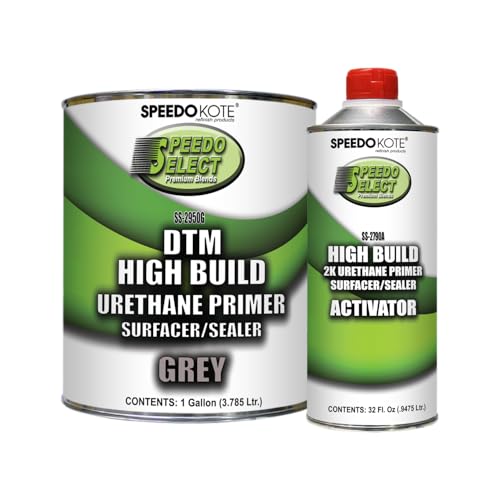
Best for: pro shops needing a reliable gray primer with strong fill and fast dry times. This high-build urethane primer offers excellent adhesion and robust coverage, reducing recoat cycles and smoothing panel transitions. The kit format is convenient for larger jobs that require a single gallon solution.
Why selected: the combination of high-build capability, fast drying, and durable adhesion makes it a practical choice for extensive refinishing work. It’s especially suitable when a smooth base is essential before topcoat application.
Limitations: not specifically labeled for all California/D.C. jurisdictions; verify local regulatory requirements before purchase. Ensure proper ventilation and adequate spray equipment setup for optimum results.
U-POL 1 Gallon High Solids High Build Kit
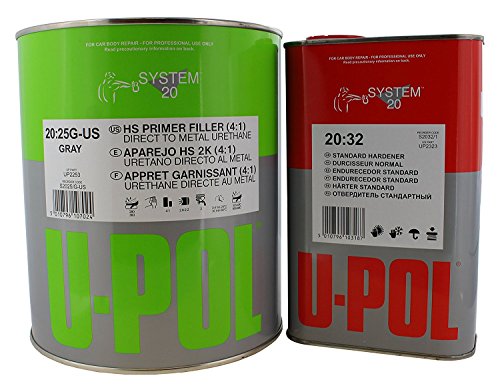
Best for: shops needing a versatile 3-in-1 direct-to-metal primer with a straightforward 4:1 ratio and strong hiding power. It’s well-suited for large panels and multi-panel repairs where opacity matters more than color nuance.
Why selected: its European design emphasizes high build and hiding power, reducing the number of coats required to achieve uniform coverage on difficult substrates. This can speed up workflows in busy repair environments.
Limitations: be mindful of curing windows which can vary with temperature; ensure the working environment matches the recommended 60–95°F range for best results.
LiME LiNE Sand-able Primer Surfacer 1.25 Quart

Best for: refinishing projects that require durable weather resistance and corrosion protection on direct-to-metal surfaces. Although this is a quart, it’s a critical compatibility pick when paired with gallon-sized topcoats and reducers in legacy workflows.
Why selected: offers exceptional weather and corrosion resistance, making it a reliable base for long-lasting finishes on exposed automotive panels. Use in applications where substrate exposure is a concern.
Limitations: size is quart, not gallon; plan accordingly if you specifically need gallon quantities. Ensure accurate mixing and proper disposal of leftovers per local rules.
Speedokote SMR-210/211 Gray Kit
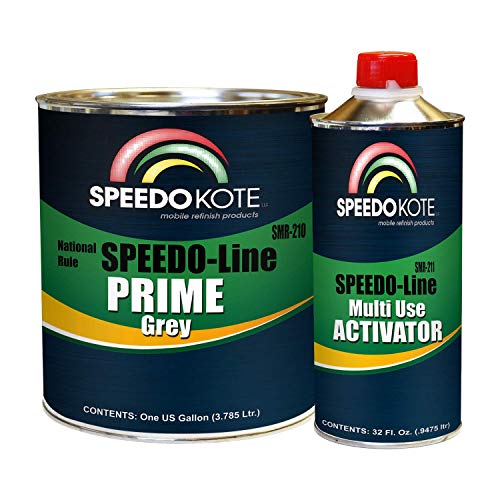
Best for: body shops that want an activator-included gallon package for streamlined workflow and quick turnarounds on medium to large panels.
Why selected: high-build urethane primer with strong adhesion and fast dry times is ideal for reducing cycle times. The kit’s included activator makes it convenient for environments that want fewer separate purchases.
Limitations: verify whether the California/Delaware/Maryland restrictions apply to your purchase; follow all safety data guidelines when using activators and primers in combination.
BodyShop Essentials 4:1 High-Build Primer

Best for: professional refinishing projects seeking a robust, premium 2K primer with strong filling capabilities and solid adhesion across multiple panels.
Why selected: its 4:1 mix ratio is a common workflow in shops that want predictable drying and a reliable bond between primer and subsequent coats. It’s suited for complete refinishes and multi-panel repairs.
Limitations: hardener sold separately means additional purchase planning is necessary; ensure compatibility with your existing spray equipment and solvent system.
Buying Guide: Key Considerations For Gallon Automotive Primers
- Volume and kit contents: Decide whether a gallon kit with activator is most convenient, or if you prefer a direct-to-metal primer with minimal components.
- Build and adhesion: High-build urethane primers provide better fill and smoother surfaces; consider your panel complexity and substrate condition.
- Mix ratio and hardener: Some products are 4:1, others 4:1 with included activator. Ensure you have the right hardener and workplace safety supplies.
- Drying time and curing: Fast-drying options save time but may require more precise shop conditions. Temperature ranges matter for performance.
- Opacity and hiding power: Higher opacity reduces the need for multiple coats on repaired areas, especially important on darker or metallic surfaces.
- Regulatory and regional considerations: Some primers have jurisdiction-specific requirements; verify local rules before purchase.
- Direct-to-metal compatibility: If you’re working with bare metal, direct-to-metal primers save prep steps but require clean, rust-free substrates.
- Surface preparation: Even the best primer depends on proper sanding and cleaning; plan for scuffing, masking, and solvent wiping.
Frequently Asked Questions
- What is a high-build primer good for?
High-build primers fill small scratches and provide a smooth base for topcoats, reducing the number of additional coats needed.
- Do gallon primers require a specific hardener?
Most gallon primers use a compatible hardener; always follow the manufacturer’s mixing ratio and safety guidelines.
- Can I use direct-to-metal primers on all substrates?
Direct-to-metal primers work on clean, prepared metal surfaces but may not be suitable for some plastics or treated metals without proper adhesion promoters.
- Is faster drying always better?
Faster drying speeds can improve workflow but require precise temperature and ventilation control to avoid solvent trapping or poor film formation.
- How do I choose between gray, black, and white primers?
Choose based on topcoat color, hiding power, and repair visibility; gray is a common balance for many topcoats.