Whether you’re planning an emergency backup, a camping trip, or an outdoor event, a generator that runs on propane offers convenient fuel availability and longer shelf life. This guide highlights five practical options and related propane accessories to help you choose. The selections emphasize dual-fuel flexibility, quiet operation, and RV or home backup readiness. Best for home backup planners, campers, and RVers who want reliable propane support and simple fueling.
| Product | Fuel Type | Key Wattage | Run Time |
|---|---|---|---|
| Westinghouse 4650 Peak Watt Dual Fuel Portable Generator | Gas & Propane | 4650 peak / 3600 running (Gas); 4650 peak / 3240 running (Propane) | Up to 14 hours per tank |
| PowerSmart 3800 Watt Dual Fuel Inverter Generator | Gas & Propane | 3800 starting / 3300 running (Gas); 3500 starting / 3100 running (Propane) | Up to 10 hours (Gas); up to 25 hours (Propane) |
| Westinghouse 14500 Peak Watt Dual Fuel Backup Generator | Gas & Propane | 14,500 peak / 11,500 running (Gas); 13,500 peak / 10,500 running (Propane) | Up to 19 hours on large tank |
| Flame King 100LB Propane Tank | Propane | 100 lb capacity | On-site refilling capability |
| Flame King 420LB Propane Tank | Propane | 420 lb capacity | Pre-equipped with gauges and valves for safe filling |
Westinghouse 4650 Peak Watt Dual Fuel Generator
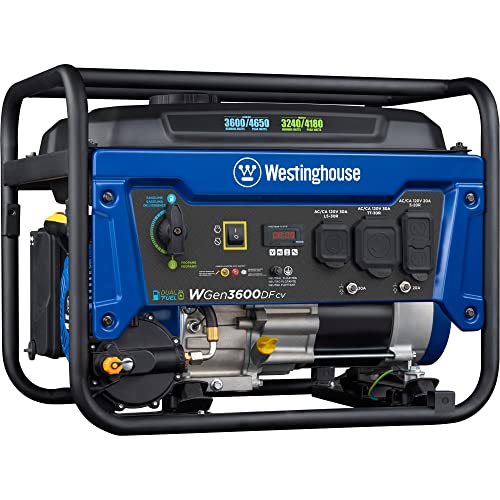
Best for home backup and RV use where both gasoline and propane are practical. This model delivers 4650 peak watts and 3600 running watts on gas, or 3240 running watts on propane, offering versatility in fuel choice. It includes a 4-gallon tank with a fuel gauge and multiple outlets, including a 30A RV outlet, making it suitable for RV parks and small homes. A CO sensor adds safety. Caution: propane performance may be lower than gasoline under heavy loads.
PowerSmart 3800 Watt Dual Fuel Inverter Generator
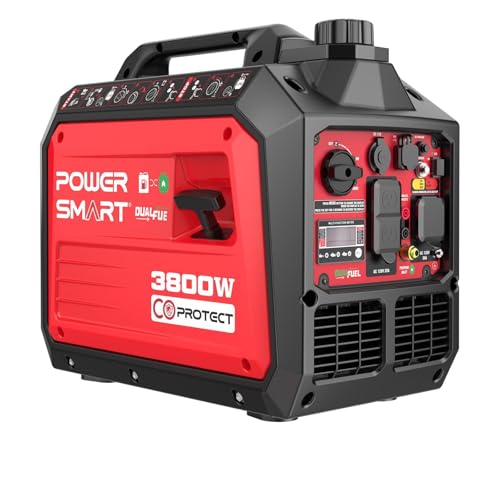
Choose this for quiet operation and clean power for sensitive electronics. It provides 3800 starting watts and 3300 running watts on gasoline, and 3500 starting / 3100 running watts on propane, with up to 10 hours on gas and 25 hours on propane. It features an inverter system that produces stable, sine-wave power suitable for laptops and CPAP machines. Caution: inverter systems are best for lighter loads; heavier loads reduce runtime.
Westinghouse Outdoor Power 14500 Peak Watt Dual Fuel

Best for larger homes or more demanding outdoor use, this generator delivers 14,500 peak watts and 11,500 running watts on gasoline, and 13,500 peak / 10,500 running watts on propane. It runs for up to 19 hours on a 9.5-gallon tank and can operate on 20 lb propane tanks for more extended events. Caution: higher power output means larger size and weight; ensure space for adequate ventilation and exhaust clearance.
Flame King 30 Pound Tank (OPD)
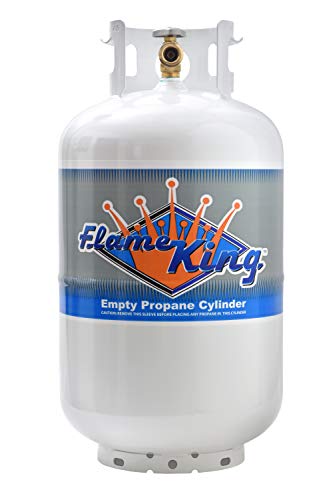
Best for compact propane supply with safety features and standard OPD valve. This 30-pound cylinder is suitable for smaller portable generators and outdoor grilling setups. It is pre-purged and welded steel for durability. Caution: provide proper storage and handling per safety guidelines and local regulations.
Flame King YSN401 40 Lb Propane Tank

Best for mid-range propane supply with an overflow protection device (OPD) for safe filling. This 40-pound tank balances size and run-length for smaller generators and home backup setups. Caution: is not a small-carry tank; ensure proper handling and compliance with transport regulations when moving.
Buying Guide: Key Considerations for Propane Generators and Tanks
Fuel flexibility matters. Dual-fuel generators let you switch between gasoline and propane to match fuel availability and price. Look for a propane-ready model with a dedicated RV or 30A outlet if you plan to power an RV or outdoor equipment.
Power needs. Determine your essential electrical load and choose a generator with sufficient starting and running watts. For higher power needs, consider models with 13,500–14,500 peak watts and propane-rated running watts, ensuring you have ample run time on a chosen tank size.
Run time and fuel capacity. Larger fuel tanks extend runtime but increase weight and footprint. If portability is important, balance tank size with capacity to refill easily on-site. Consider propane storage safety and the convenience of on-site refilling for bigger tanks.
Safety features. CO sensors, automatic shutdown on low oil, and proper outlets with weather-resistant covers improve safety for outdoor use. For propane, ensure tanks have OPD valves and secure connections to prevent leaks.
Portability and noise. For camping or tailgating, inverter generators with quiet operation (65 dBA or lower) help maintain neighbor-friendly performance. If you need heavy-duty home backup, a larger dual-fuel unit may be warranted.
FAQ: Propane Generators and Tank Accessories
- What is the advantage of a dual-fuel generator? It can run on gasoline or propane, giving you flexibility based on fuel availability and cost.
- Can propane supply affect generator performance? Propane usually delivers clean, stable power, but some units may show different wattage ratings between fuels; consult the manufacturer guidelines.
- Are propane tanks safe to transport? Yes, when properly secured and in compliance with local regulations. Tanks should be transported upright and secured to prevent movement.
- What size propane tank is best for home backup? For larger home backup, 100 lb or larger tanks offer longer run times between refills; smaller tanks suit RVs and portable use.
- Do propane tanks require special fittings? Yes, use tanks with standard fittings and ensure OPD valves are present to prevent overfilling and leaks.