The right oil helps muscles stay strong, pistons stay smooth, and classics stay reliable on the road. This guide focuses on high-performance and classic-car friendly engine oils that meet the needs of muscle cars, hot rods, and trophy-winning show cars. We compare synthetics, conventional blends, and high-mileage formulas from trusted brands to help you choose the optimal oil for cold starts, high-temperature runs, and aging engines without catalytic converters. Each product below is chosen for compatibility with muscle-car setups and classic engines while providing robust protection and dependable film strength.
| Product | Brand | Key Benefit |
|---|---|---|
| Lucas Oil 10679 Hot Rod & Classic Car SAE 10W-30 | Lucas Oil | Thick protective film with zinc/molybdenum/phosphorus |
| Lucas Oil 10683 Hot Rod & Classic Car SAE 10W-40 | Lucas Oil | Excellent cold start and high-temp protection |
| Valvoline VR1 Racing SAE 10W-30 | Valvoline | High zinc for extreme wear protection and low friction |
| Mobil 1 Supercar Advanced Full Synthetic 0W-40 | Mobil | Cleaner engine life with reduced deposits |
| Castrol GTX Classic 20W-50 Conventional | Castrol | High zinc/phosphorus for wear protection |
Lucas Oil 10679 Hot Rod & Classic Car SAE 10W-30 Motor Oil – 5 Quart

Manufactured with high-quality paraffinic base oils, this oil is fortified with a unique additive package featuring elevated levels of zinc, molybdenum, and phosphorus. The result is a tougher, thicker additive film that provides maximum protection for muscle cars and classic engines, helping minimize wear during aggressive driving and long storage periods alike. Suitable for non-catalytic converter setups, it supports reliable cold starts and stable viscosity under heat.
Lucas Oil 10683 Hot Rod & Classic Car SAE 10W-40 Motor Oil – 5 Quart

Specially formulated for muscle, showroom, classic, and trophy cars without catalytic converters, this oil uses top-quality paraffinic base oils and a zinc/molybdenum/phosphorus additive package for maximum protection. It delivers good cold-temperature properties while withstanding high operating temperatures, making it a strong choice for hot summer shows or spirited highway runs with classic iron.
Valvoline VR1 Racing SAE 10W-30 Motor Oil – 1 QT (Case of 6)

America’s racing oil is recommended for high-performance gasoline engines and those using full or partial alcohol fuels. Its special friction modifiers minimize friction, helping manage heat for maximum power and torque at high RPMs. The formula includes 2X more zinc for extreme wear protection on pistons, cams, and bearings, making it a preferred option for tuned muscle engines and race-ready builds requiring consistent high-load performance.
Mobil 1 Supercar Advanced Full Synthetic Motor Oil 0W-40

This full synthetic 0W-40 oil is designed to reduce particulate buildup in diesel particulate filters, limit poisoning of gasoline catalytic converters, and curb sludge formation. It supports long engine life and cleaner operation, which is especially relevant for classic engines pushed through modern driving cycles and the occasional track event or extended highway run.
Castrol GTX Classic 20W-50 Conventional Motor Oil
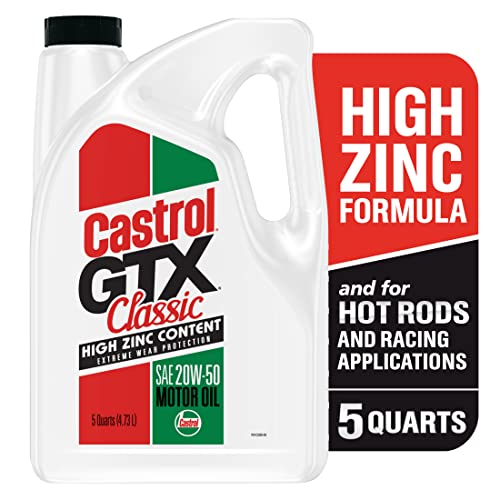
Castrol GTX Classic 20W-50 offers high zinc and phosphorus levels for extreme wear protection, helping to maintain a tough, thick oil film under severe conditions. Its formulation resists foaming and thermal degradation for greater stability in aging engines that see long idling periods or hot summer drives. This option aligns with traditional lubrication choices for classic muscle cars that rely on robust film strength and durability.
Buying Guide: Key Purchase Considerations For Muscle Cars
- Engine type and setup: Consider whether your car has a catalytic converter, a classic non-emissions engine, or a high-performance build. This affects oil choice and additive needs.
- Viscosity and climate: Lower viscosities (like 0W-40) aid cold starts; higher viscosities (20W-50) provide film strength in hot climates and under heavy load. Match to your climate and driving style.
- Base oil and additives: Synthetics offer cleaner operation and better high-temperature stability; conventional blends rely on zinc/phosphorus for wear protection. High-mileage options add seal conditioners for aging engines.
- Wear protection vs. horsepower: Oils with robust anti-wear additives help protect flat-tappet cams and high-compression setups common in muscle cars, especially with older engines.
- Storage and maintenance: For show cars, consistent maintenance and correct oil change intervals reduce performance variability and preserve engine condition.
- Compatibility with catalytic converters: If your muscle car has or previously had a catalytic converter, choose oils formulated for modern exhaust systems to minimize emissions-related issues.
- Cost vs. value: Higher zinc and phosphorus content often adds cost but can extend engine life in high-stress environments. Consider balance with your maintenance plan.
When selecting an oil, align the choice with your engine’s design, how you drive, and the environment your car operates in. The options above span traditional, performance-focused, and newer synthetic formulations to help you protect classic power without compromising reliability.
Additional Considerations And Comparisons
- Protection under high temperatures: Heavy-duty zinc/phosphorus formulas tend to perform well in hot-running classics and race-ready builds.
- Cold-start performance: 0W-30 or 10W-30 oils improve cold-start lubrication for engines stored in cooler climates or during winter storage.
- Fuel compatibility: Some racing and high-performance oils are designed to handle alcohol-blended fuels, which can be relevant for certain muscle-car setups.
- Oil change intervals: High-mileage or synthetic blends may allow longer intervals, but classic engines often benefit from more frequent changes to maintain protection.
- Seals and gaskets: Certain oil additives help with seal conditioning, which matters for aging gaskets common in older muscle cars.