Navigating fuel data on a boat can be straightforward with the right NMEA 2000 fuel sender gear. This guide highlights five standout products that convert, measure, or display fuel information on NMEA 2000 networks. It helps boaters choose the best option for fuel reporting, whether you’re upgrading an older rig or equipping a new build. The top picks cover converters, fuel sensors, flow monitors, and compatible gauges for comprehensive fuel management across 12V systems.
| Product | Best For | Why It’s Notable |
|---|---|---|
| Astibym NMEA 2000 Converter | System upgrades on mixed sensor types | Converts 0-190 ohm EU and 240-33 ohm US sensors to NMEA 2000; supports multiple tank types; IP67 |
| Garmin GFS 10 Fuel Sensor | Direct fuel level sensing | Dedicated fuel sensor compatible with Garmin ecosystems; compact and OEM-feel integration |
| Maretron FFM100-01 Fuel Flow Monitor | Fuel flow accuracy and optimization | Measures fuel flow with precision and supports reverse flow detection |
| KUS USA Fuel Level Gauge (Black) 2″ | NMEA 2000 & J1939 level readouts | IP67-rated, 12/24V operation; clear visual indication of fuel level |
| Ancor NMEA 2000 Drop Cable (0.5m) | Backbone and accessory wiring | Color-coded, universal compatibility, certified NMEA 2000 accessory |
Astibym NMEA 2000 Converter, 9‑32V DC

The Astibym NMEA 2000 Converter is designed for mixed sensor systems on boats. It converts resistive sender signals to NMEA 2000 data, supporting six tank categories (fuel, fresh water, waste, live well, oil, black water) plus one rudder type for 0–190 ohm sensors and up to four senders per type. This makes it ideal for installations that include older EU or US style senders without full compatibility.
Best for: boat owners upgrading legacy gauge networks without replacing existing senders. Why selected: it provides broad sensor compatibility and clear network data without major wiring changes. Caution: ensure your existing sensors match the supported resistance ranges to avoid misreads.
Garmin GFS 10 Fuel Sensor
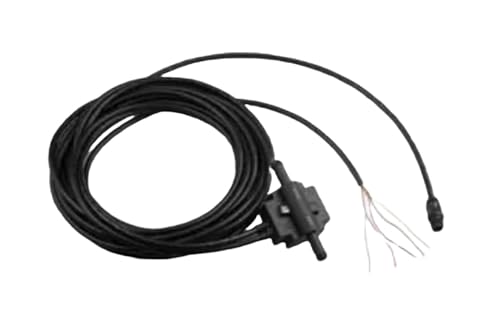
The Garmin GFS 10 Fuel Sensor is a dedicated fuel level sensor designed for integration with Garmin networks. It provides a straightforward solution for boaters seeking a reliable fuel gauge that aligns with Garmin instrumentation and data sharing. Its Mfg part 010-00671-00 designation helps buyers verify compatibility with Garmin systems.
Best for: Garmin-centric installations or crews already using Garmin’s instrument suite. Why selected: it offers a purpose-built fuel sensing option with strong compatibility. Caution: limited details on included mounting hardware in this listing; verify fitment for your tank opening.
Lowrance Fuel Flow Sensor w/10′ Cable & T-Connector

The Lowrance fuel flow sensor includes a 10-foot cable and a T-connector, facilitating integration into Lowrance-based networks. The listing emphasizes a modular approach that helps with easier routing and installation along backbones. It is best for configurations where direct flow measurement is prioritized and where the backbone layout matches Lowrance products.
Best for: users building or upgrading a Lowrance-centric system and seeking straightforward wiring. Why selected: clear cable lengths and connector options simplify installation. Caution: the explicit sensor type is not stated in the features snippet; verify compatibility with your fuel system’s flow meter requirements.
Maretron FFM100-01 Fuel Flow Monitor

The Maretron FFM100-01 Fuel Flow Monitor provides fuel flow data with precision and supports true temperature compensation via built-in thermistors. These features help optimize fuel consumption and identify anomalies in real time. It also detects reverse flow, a useful capability when fuel systems experience fluctuating pressures.
Best for: vessels requiring accurate flow data and temperature-compensated readings. Why selected: because it offers true temperature compensation and reverse-flow detection, contributing to more reliable fuel management. Caution: Maretron devices can involve more complex integration; ensure your network supports Maretron’s data structure.
KUS USA Fuel Level Gauge (Black) 2″

The KUS fuel level gauge combines NMEA 2000 and J1939 signals with a 12V/24V operating range and an IP67 rating. The Black version delivers a robust visual readout for fuel level with straightforward installation. It’s designed for marine-grade reliability in harsh conditions.
Best for: straightforward, rugged gauge readouts on mixed network standards. Why selected: IP67 protection and dual signal compatibility support reliable fuel level display. Caution: gauge size and form factor must fit your instrument panel cutouts; verify compatibility before purchase.
KUS USA Fuel Level Gauge (White) 2″

The white variant of the KUS gauge likewise provides NMEA 2000 and J1939 compatibility with IP67 protection. Its readability is enhanced by a white face, making it easy to interpret fuel levels in bright cabin lighting or direct sunlight.
Best for: installations where panel visibility is critical and the same sensor family is used across gauges. Why selected: consistent performance with the black variant and clear level indication. Caution: verify panel fit and bezel size for a cohesive dashboard look.
Ancor 270300 NMEA 2000 Drop Cable – .5 Meter

The Ancor 270300 drop cable is color coded for easy installation and identification, featuring flexible 22 AWG power conductors for routing convenience. It is NMEA 2000 Certified and designed to work with a wide range of manufacturers’ products, making it a practical backbone accessory for fuel sender networks.
Best for: installers needing clean, organized backbone spans and reliable connections. Why selected: clear color-coding and conformance to NMEA 2000 standards support maintainable marine networks. Caution: ensure the cable length suits your installation plan to avoid excess slack or tension on backbones.
Ancor 1m NMEA 2000 Power Cable with Tee

This 1-meter Ancor power cable includes a tee for direct backbone connections, and uses large 18 AWG power conductors to reduce voltage drop for better reliability. It aligns with ABYC and USCG sizing guidelines for minimum conductor size, supporting safer, longer runs on marine installations.
Best for: setups requiring a direct tee connection to a backbone with solid power delivery. Why selected: ensures power stability along the NMEA 2000 network. Caution: check maximum backbone length and total device load to avoid excessive current draw on a single leg.
Buying Guide: Key Considerations For NMEA 2000 Fuel Senders
- Sensor compatibility: Determine whether you need to translate 0–190 ohm EU sensors or 240–33 ohm US sensors, or if you require a dedicated fuel sensor with direct compatibility.
- Network integration: Consider whether your system leans toward Garmin, Lowrance, Maretron, or generic NMEA 2000 networks and select devices that align with your main instrument suite.
- Power and protection: Look for 9–32V DC operation and IP67 or higher protection for marine environments. Safety features like reverse battery protection are beneficial.
- Measurement goals: Decide between fuel level gauging, flow monitoring, or a combination. For efficiency, combine a flow monitor with a reliable level gauge where possible.
- Wiring and compatibility: Use color-coded drop cables and tees to simplify installation, ensuring your backbone can accommodate the chosen devices without excessive voltage drop.
- Scalability: If you plan to expand the system, choose devices that support multiple senders and tank types to minimize future rewiring.
FAQ
- What is NMEA 2000, and why is it useful for fuel senders?
– NMEA 2000 is a marine data network standard that allows different devices to share information, providing centralized fuel data across gauges, displays, and engines. - Do I need a converter for older resistive sensors?
– If your senders use non-NMEA 2000 outputs, a converter like the Astibym can translate signals to the network. Check resistance ranges to ensure compatibility. - Can I mix brands in a single NMEA 2000 network?
– Yes, as long as devices support NMEA 2000 and you follow proper wiring practices and power budgeting. - What should I verify before buying a fuel level gauge?
– Confirm the signal standard (NMEA 2000 vs J1939), gauge size, and IP rating, plus whether the gauge supports 12V or 24V systems. - Is temperature compensation important for fuel flow sensors?
– Yes, sensors with built-in thermistors improve accuracy by accounting for temperature-related density changes in fuel. - Do I need additional cables or tees for installation?
– Depending on your backbone layout, you may need drop cables and tees; choose products with clear installation guidelines and compatibility.