If you’re outfitting a pontoon, a trolling motor is a game changer for precise positioning, quiet operation, and extended battery life. This guide highlights five top options that pair well with pontoons, helping you decide who benefits most from each setup. Whether you fish, cruise, or simply glide in near-silent style, these picks cover freshwater and saltwater use with varied thrust, shaft length, and control features.
Buyer’s snapshot: the best pontoon trolling motor choices cater to different boating styles—frequent anglers may favor GPS-assisted stability; casual cruisers benefit from easy deployment and reliability; and larger pontoons or heavier loads might need higher thrust. The quick-reference table below compares key traits to help you choose at a glance.
| Product | Thrust | Shaft | Special Features |
|---|---|---|---|
| Minn Kota Pontoon Bow-Mow | 55 lb | 48 in | Deploy-Assist Lever, Aluminum Quick Release Bracket, PowerDrive foot pedal |
| Minn Kota Terrova Bow-Mow with GPS | 55 lb | 54 in | GPS Spot-Lock, wireless remote, jog/move features |
| Minn Kota Endura C2 Transom | 30 lb | 30 in | Telescoping tiller, 10-position bracket, heavy vegetation prop |
| Newport Pontoon-Series 55lb | 55 lb | 55 in | Deck mount included; saltwater capable |
| Haswing Cayman 12V 55lb | 55 lb | 48 in | Quiet operation, 2.4G remote, quick release bracket |
Minn Kota Pontoon Bow-Mount Electric Trolling Motor

This Pontoon Bow-Mount model provides reliable 55-pound thrust with a 48-inch shaft, designed for freshwater pontoons. Key advantages include an easy Deploy-Assist Lever to quickly lower the motor and a quiet Aluminum Quick Release Bracket that stabilizes operation and simplifies removal. The PowerDrive foot pedal controls speed, steering, and on/off functions with an 18-foot cord, aiding hands-free maneuvering. Best for: pontoons that prioritize easy deployment and reliable steering, especially in calm to moderately choppy freshwater settings. Caution: the foot pedal is not included with GPS-enabled variants, so verify compatibility if you plan to switch configurations.
Selected for pontoon owners who want straightforward setup and dependable performance without GPS features. The model suits casual fishers and leisure cruisers who need solid thrust and robust mounting in freshwater environments.
Minn Kota Terrova Bow-Mount Trolling Motor with GPS

This Terrova model features an advanced GPS trolling system with Spot-Lock, path recording, and hands-free speed and steering control. A wireless remote with LCD screen enables automatic positioning and precise control, while Spot-Lock and Jog modes maintain position and allow minor drift in any direction. Best for: anglers and serious boaters who need static positioning, easy waypoint navigation, and automated maneuvering. Limitation: higher complexity and cost compared with non-GPS models; ensure your boat’s wiring and battery setup can support GPS electronics.
Why it was selected: the GPS capabilities provide repeatable positioning in variable currents and wind, reducing drift and freeing your hands for fishing or line management.
Minn Kota Endura C2 Transom-Mount Electric Trolling Motor
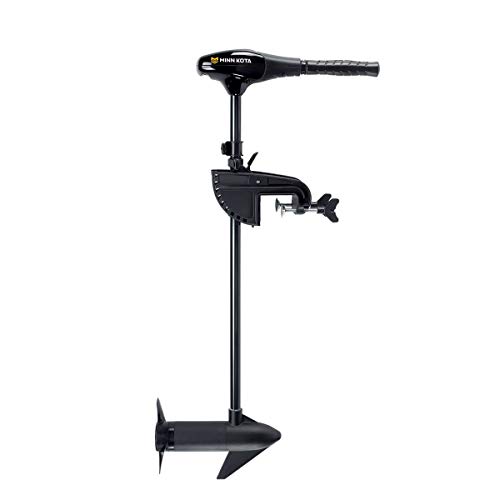
The Endura C2 provides a compact 30-pound thrust with a 30-inch shaft, ideal for smaller pontoons or calmer freshwater lakes. Notable features include a 6-inch Telescoping Tiller for comfortable, all-day control, a 10-Position Lever Lock Bracket for quick angle adjustments, and a reinforced composite head to resist warping and UV damage. Best for: lightweight pontoons or users who prioritize easy transport and simple operation. Caution: lower thrust may be insufficient in windy or current-heavy conditions on larger pontoons.
Selected for repair-free reliability and straightforward control, this option suits smaller vessels or those seeking budget-friendly power without GPS automation.
Newport Pontoon-Series 55lb Thrust Motor

Newport Vessels’ Pontoon-Series offers 55 pounds of thrust with a 55-inch shaft and included deck mount, designed for saltwater use as well as freshwater. The long shaft helps keep the prop clear of debris and waves, while the saltwater-ready construction supports durability in harsher conditions. Best for: pontoons used in mixed environments or saltwater-friendly setups. Caution: ensure your deck has adequate mounting space for the included bracket and that the motor’s height aligns with your pontoon’s hull clearance.
Newport NV-Series 55lb Trolling Motor

The NV-Series features 55 pounds of thrust and a 30-inch to 36-inch shaft option in different models, with LED battery indicators for at-a-glance power status. This saltwater-capable transom motor is designed to provide consistent performance in varied conditions while offering a compact footprint. Best for: boats that regularly navigate mixed-water environments and need easy battery monitoring. Limitation: shaft length and mounting hardware may require careful measurement to achieve ideal depth on larger pontoons.
Newport NV-Series 62lb Thrust Trolling Motor
This high-thrust option delivers 62 pounds of power with a 36-inch shaft, built for larger boats and heavier loads. It’s designed for tougher conditions, including wind and current, and features a three-blade prop for improved thrust. Best for: larger pontoons or boats that regularly encounter challenging conditions. Caution: higher power consumption means more frequent battery checks and potentially faster depletion under heavy use.
Buying Guide: Key Purchases and Comparisons
What to consider when choosing a pontoon trolling motor?
- Thrust vs. boat size: larger pontoons generally benefit from higher thrust (50–62 lb), especially in windy or choppy water.
- Shaft length: longer shafts help keep the prop in deeper water and avoid striking debris; measure your pontoon’s gunwale height and hull clearance.
- Mount type: bow-mounted motors offer precision and control, while transom-mounts can be simpler and more affordable for smaller pontoons.
- Controls: GPS Spot-Lock and wireless remotes add hands-free operation; consider whether you require automated positioning.
- Durability: saltwater-rated builds offer longer life in harsh environments; freshwater models may be lighter and cost-effective.
- Installation: check if deck space and mounting brackets are compatible with your pontoon’s layout and rail system.
- Battery considerations: verify compatible battery capacity and the added draw from electronics, especially GPS units.
How to choose by use case
- Angler who needs precise position: choose GPS-enabled Terrova or a high-thrust bow-mount with a stable bracket.
- Casual cruiser prioritizing ease of use: pick a straightforward Endura C2 or Newport series with simple deployment.
- Heavier loads or saltwater use: gravitate toward 55–62 lb thrust with longer shafts and saltwater-rated construction.
- Budget-conscious buyers: consider smaller thrust models or older designs that still meet freshwater needs.
Maintenance and safety tips
- Inspect the mounting bracket and locking mechanisms for wear and corrosion before each season.
- Rinse saltwater motors with fresh water after use and dry thoroughly to prevent corrosion.
- Recharge and store batteries properly, avoiding complete discharge to preserve life.
- Follow manufacturer guidelines for deployment and stowage to prevent damage to the motor and pontoon.
FAQ
- What is the typical lifespan of a trolling motor on a pontoon? A: With proper maintenance, motors can last many seasons, though component lifespan varies by environment and usage.
- Is GPS positioning necessary for pontoon use? A: Not always; GPS adds automation and stability, but basic propulsion often suffices for casual cruising.
- Can I install any trolling motor on a pontoon deck? A: Compatibility depends on deck space, mounting brackets, and weight distribution; consult the manufacturer’s specs.
- What shaft length should I choose? A: Longer shafts (54–55 inches) are beneficial for deeper water and larger decks, while shorter shafts work on smaller pontoons.
- Do I need a remote control for all trolling motors? A: No; most models offer varying control options, from foot pedals to wireless remotes.
- Are saltwater models worth it for a freshwater pontoon? A: If you boat in brackish or coastal waters, saltwater-rated models resist corrosion better and last longer.