If you’re upgrading an older vehicle or swapping to a performance EFI setup, a retrofit in-tank fuel pump is often the simplest path to reliable, clean fuel delivery. These modules fit various tank depths, support different flow needs, and preserve factory sending units when possible. This guide highlights five well-suited options, who they’re best for, and why each was selected. Use the quick-reference table to compare core specs at a glance.
| Product | Best For | Approx. Depth | Notes |
|---|---|---|---|
| Holley Die Cast Retrofit Carb Pump Hngr (12-129) | Classic carbureted builds needing a compact in-tank pump | 6.5″–12″ | Low profile; easy clearance |
| Sniper Cast Retrofit Carb Pump Hngr | High-performance carb setups with flexible tank mounting | 7″–12″ | Innovative clamping system |
| Holley Fuel Pump, Sniper Drop-In Retrofit | EFI builds needing reliable dual-pump support | 7″–12″ | Rotatable 360° mounting |
| Holley Fuel Pump, Drop-In Retrofit (900 LPH) | High-flow EFI applications | 7″–12″ | Billet flanges; wide fittings |
| OSIAS Fuel Pump TBI to LSx Swap EP381 | GM LSx swaps with TBI-era wiring and regulators | In-tank; varies by tank | 58 PSI regulated; direct drop-in |
Holley Die Cast Retrofit Carb Pump Hngr (12-129)

This in-tank module is designed to convert a vehicle to a self-contained fuel delivery system for carbureted engines. It fits tanks from approximately 6.5″ to 12″ deep, helping broaden compatibility across a range of vehicles. The low-profile design keeps clearance minimal, which is helpful for crowded engine bays. Best for older builds or carbureted projects needing a compact retrofit solution. Caution: verify you need a carb-specific retrofit pump, as EFI-focused setups require different configurations.
Sniper Cast Retrofit Carb Pump Hngr

This cast-retrofit pump is tailored for carbureted systems and offers a ¼” NPT inlet for varied plumbing. It installs in tanks from about 7″ to 12″ deep and features an innovative clamping system that lets you position the module anywhere in the tank near your existing sending unit. It’s best for builders needing flexible mounting and easy integration with older fuel systems. Limitation: ensure compatibility with carb-era plumbing before purchase.
Holley Fuel Pump, Sniper Drop-In Retrofit

Designed for in-tank use with a focus on EFI reliability, this dual-pump unit can run pumps together or trigger a second pump as needed. The clamping system allows unit rotation to align plumbing and wiring, while maintaining the factory sending unit. Best for EFI builds requiring staged or boosted fuel flow without modifying the stock hanger. Caution: ensure your tank can support dual-pump operation and space for wiring access.
Holley Fuel Pump, Drop-In Retrofit, 900 LPH

This higher-flow in-tank unit is built for substantial EFI needs, featuring a robust clamping system that keeps the module close to the tank while accommodating the factory sending unit. Its 7″–12″ depth range covers many common tanks, and billet anodized flanges with 8AN connections support flexible plumbing. Best for high-performance EFI setups where maximum fuel supply matters. Limitation: higher flow can demand more electrical current and cooling considerations in some installs.
OSIAS Fuel Pump TBI to LSx Swap EP381 82-95 GM
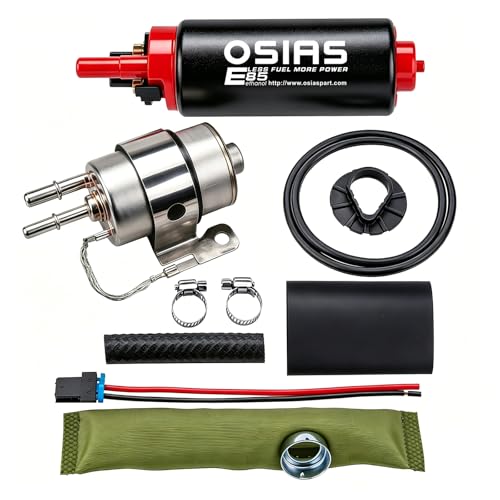
Ideal for GM TBI-to-LS swaps, this in-tank EFI pump is designed to work with LS-series engines while avoiding overload on factory wiring and OE regulators. It provides a 58 PSI regulated flow and supports direct drop-in replacement for 1982–1995 GM TBI hangers. Best for LSx swap enthusiasts seeking a straightforward integration path. Caution: verify regulator compatibility with your chosen rails or regulators for optimal pressure control.
Buying Guide: Key Considerations For Retrofit In-Tank Pumps
What tank depth does your vehicle have? Most retrofit modules target tanks between 6–12 inches deep, but some systems fit deeper tanks or offer adaptable mounting. Check your tank depth before selecting a unit.
Do you need carbureted or EFI compatibility? Carbureted retrofits prioritize simple cooling and fit, while EFI-oriented pumps emphasize high flow, dual-pump capability, and precise pressure control.
Is there a need to preserve the factory sending unit? Some modules are designed to clamp around or alongside the existing hanger, reducing wiring changes. If preserving the sending unit matters, look for a clamping or drop-in design.
What plumbing connections are supported? In-tank pumps use various fittings (8AN, 6AN, etc.). Confirm the inlet/outlet sizes and valve configurations align with your fuel lines and regulators.
Future-proofing: if you anticipate higher fuel demand or forced induction, consider a higher-flow unit with dual-pump capability and corrosion-resistant construction.
Frequently Asked Questions
- What is the main advantage of a retrofit in-tank fuel pump?
Improved reliability, quieter operation, and compatibility with modern EFI or carbureted systems. - Can I reuse my existing fuel sending unit with these pumps?
Many models are designed to clamp or integrate with the factory sending unit, but verify compatibility with your specific vehicle. - Do all retrofit pumps support gasoline and E85?
Most modern units are labeled for Gas / E85, but always confirm fuel compatibility in the product details. - What should I consider for installation depth?
Choose a pump that fits within your tank depth to ensure proper fit and clearance above mounting surfaces. - Is dual-pump operation beneficial for my build?
Yes for high-power EFI or forced-induction systems; it provides staged or increased fuel supply as needed. - Are there safety or compatibility notes to keep in mind?
Follow manufacturer installation guidelines, and ensure electrical wiring is protected from heat and vibration.