For demanding lawns and thick brush, a self-propelled walk-behind string trimmer can save time and effort. This guide highlights five top options, focusing on power, durability, maneuverability, and maintenance. Each profile includes key features to help you compare performance and value.
| Product | Brand | Key Feature |
|---|---|---|
| BILT HARD Walk Behind String Trimmer | BILT HARD | 170cc 4-cycle engine, 22″ cutting width, 14″ wheels |
| YARDMAX YL2250 | YARDMAX | 170cc, offset head, cord storage onboard |
| Earthquake Walk Behind String Mower | EARTHQUAKE | 160cc Viper engine, 22″ cut, never-flat wheels |
| SENIX High Wheel Walk Behind | SENIX | 22″ cut, .155″ line, 14″ rubber wheels |
| Earthquake 60V Walk Behind Mower | EARTHQUAKE | 22″ cut, two 4Ah batteries, variable speed |
BILT HARD Walk Behind String Trimmer

The BILT HARD Walk Behind String Trimmer is powered by a robust 170cc 4-cycle OHV engine with a manual recoil easy start system, designed to handle heavy mowing tasks. Its one-piece steel deck adds strength and stability while reducing vibration, ensuring a solid cutting surface. A 22-inch cutting width enables rapid mowing through thick grass and weed growth. The 14-inch never-flat wheels provide stability on uneven terrain, and the foldable ergonomic handle improves grip and enables compact storage. This model aims to balance power, durability, and practical portability for large lawns, farms, or properties with varied terrain.
YARDMAX YL2250 22-Inch Gas Walk Behind
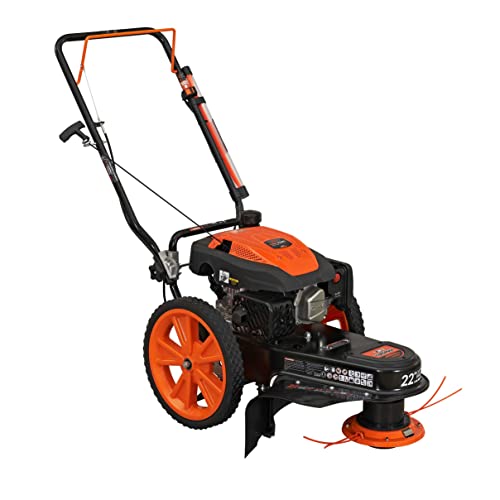
The YARDMAX YL2250 integrates a 170cc gas engine and a 22-inch mowing swath to tackle large yards quickly. Its offset head design allows precise trimming along fences, barns, and landscaping without constant repositioning. A notable convenience is onboard trimmer string storage (cord caddy), reducing downtime spent sourcing line. The lightweight yet rugged build supports prolonged use with manageable vibration, making it a strong option for homeowners who need speed on medium-to-large properties.
Earthquake Walk Behind String Mower (Model #40314)
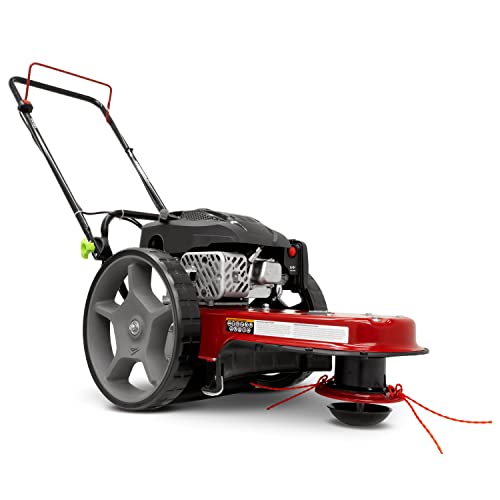
The Earthquake 40314 Walk Behind String Mower pairs a 160cc Viper 4-cycle engine with a robust 22-inch cutting diameter and 14-inch never-go-flat wheels. A one-piece steel deck delivers strength with reduced vibration for more comfortable operation. The model includes a reliable clutch and hand bail system that keeps the mower running and disengages to stop the head for debris clearance without restarting the engine. With strong cutting performance across tall grass and brush, this option is well-suited for rugged landscapes and farm properties.
SENIX High Wheel Walk Behind Brush Cutter

The SENIX STMG-L is built for pro-level trimming with a 22-inch cutting swath and a .155-inch line. Its 160cc 4-cycle engine delivers reliable power for demanding weed and brush removal. The 14-inch rubber wheels provide solid traction across uneven terrain, and the steel deck offers durability. A five-position height adjustment lever lets users tailor cut height from 1.57 to 3 inches, enabling precise lawn maintenance and efficient traversal of rough ground or dense growth scenarios.
Earthquake 60V Walk Behind String Mower
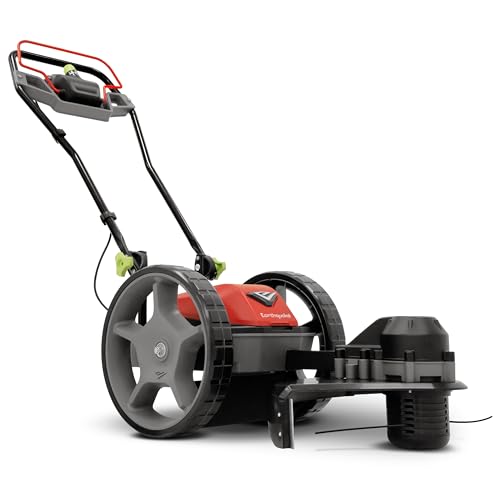
This Earthquake 60V model introduces cordless convenience with two 4Ah batteries and up to 90 minutes of runtime. A 22-inch cutting diameter maintains efficient mowing, while a variable speed dial allows adjusting performance to match terrain and vegetation density. The 14-inch never-flat wheels contribute to dependable maneuverability, and the adjustable handlebar improves ergonomics for extended use. This option appeals to users seeking battery-powered flexibility without a cord, ideal for mid-size properties.
Buying Guide: Key Purchase Considerations
- Engine power and reliability: Gas engines (170cc, 160cc) generally offer strong cutting performance for heavy brush. Consider engine type and maintenance requirements.
- Cutting width and wheel size: Wider cuts speed up large-area work, while larger wheels improve stability on uneven ground.
- Deck construction and durability: A steel deck provides durability and vibration reduction; look for reinforced builds for long-term use.
- Trimmer head design and line management: Offsets or cord storage help with edge trimming and reducing downtime spent on line replacement.
- Ergonomics and controls: Foldable handles, adjustable heights, and easy-start mechanisms reduce user fatigue during extended sessions.
- Drive and maneuverability: Self-propelled or push capabilities, weight distribution, and wheel design affect traction and ease of use on slopes or thick vegetation.
- Maintenance and support: Availability of parts, warranty terms, and service networks influence total cost of ownership.
- Battery vs. gas: Battery-powered models offer quieter operation and zero emissions but trade runtime; gas models typically deliver longer continuous operation for large jobs.
- Safety features: Clutch systems, blade or head disengagement, and protective guards are essential for safe operation in rugged areas.
- Intended terrain: For fences, edges, and rough brush, consider offset heads, height adjustment, and wheel size to match your property’s layout.