Looking for a spray-on gas tank sealer that delivers a reliable, long-lasting seal for metal, plastic, or composite tanks? This guide highlights top options and helps buyers choose the right product based on tank material, fuel type, and operating conditions. The selections are suitable for runners-up, hobbyists, and professional restorers who want a practical, spray-based approach to stop leaks fast. The top picks are best for addressing pinholes, minor corrosion, and leakage points in gas tanks and related housings.
Overview table of chosen products. Use this at a glance to compare key traits.
| Product | Best For | Notes |
|---|---|---|
| Permatex 82099 Spray Sealant | Hoses, oil pans, small leaks | Fast-drying, rubber barrier; works on multiple materials |
| POR-15 Fuel Tank Sealer (8 oz) | Metal tanks; rust prevention | Non-porous sealant; corrosion resistance |
| J-B Weld TankWeld | Metal repairs; quick rebuilds | Epoxy putty; sets quickly |
| KBS Coatings 5200 Gold Standard Tank Sealer | Long-term fuel compatibility | Non-porous, forms strong barrier |
| Eastwood Tank Sealer Kit | Complete system for various tanks | All-in-one kit; includes prep supplies |
Permatex 82099 Spray Sealant, 9 oz

Best for quick, light-duty leaks in hoses, oil pans, and various housings. The spray creates a rubber barrier that stops low-pressure leaks within minutes. It is suitable for plastic, PVC, metal pipes, and transmission pans and avoids the swelling issues that some liquid sealants can cause.
Who it’s for: DIYers with small penetrations or drips who need a fast seal without removing components. Why selected: convenient spray format and broad material compatibility. Caution: not a substitute for large or high-pressure leaks; ensure surfaces are clean and dry before application.
POR-15 Fuel Tank Sealer (8 fl oz)
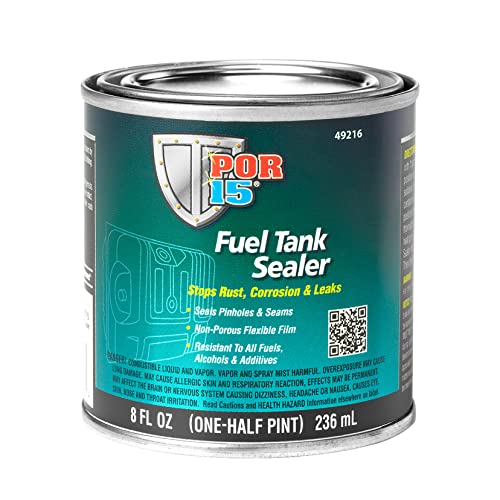
Best for metal fuel tanks where rust prevention is a priority. This non-porous sealant stops rust and forms a durable barrier against fuels. It is designed to resist a wide range of fuels and additives, making it a solid choice for classic cars and marine applications.
Who it’s for: vehicle restorers and professionals sealing metal tanks prone to rust. Why selected: proven rust-inhibiting composition and compatibility with common fuels. Caution: preparation is essential; remove fuel and thoroughly clean the tank before applying for best adhesion.
J-B Weld 8217 TankWeld Gas Tank Repair

Best for metallic repairs and rebuilds around gas tanks. TankWeld is a hand-mixable, steel-reinforced epoxy putty that quickly repairs or rebuilds metal sections, including gas tanks, radiators, and water tanks. It sets in minutes and cures within an hour with a strong tensile strength.
Who it’s for: users needing an in-place repair to restore tank integrity. Why selected: rapid hardening and metal compatibility. Caution: provide adequate ventilation and follow cure times; not suitable for continuous high-pressure fuel exposure on large seams.
KBS Coatings 5200 Gold Standard Tank Sealer (8 fl oz)

Best for long-term rust resistance and compatibility with modern fuels. The Gold Standard Tank Sealer forms a non-porous, durable barrier that bonds to rust and bare metal, sealing pinholes and seams in one application. It resists gasoline, diesel, ethanol blends, and common solvents.
Who it’s for: builders and restorers seeking a durable, fuel-resistant coating. Why selected: proven barrier properties and compatibility with contemporary fuel types. Caution: surface preparation is critical; clean and degrease thoroughly for optimal adhesion.
KBS Coatings 52000 Cycle Tank Sealer Kit

Best for complete tank restoration with a 3-step system. The kit includes a heavy-duty degreaser, rust remover, metal etch, the Gold Standard Tank Sealer, gloves, a stir stick, and instructions. It seals rust and stops corrosion, forming a fuel- and ethanol-proof coating that resists cracking, peeling, or flaking over years.
Who it’s for: serious restorers who want a full prep-to-seal workflow. Why selected: all-in-one solution reduces the need for extra purchases. Caution: follow the full prep steps; improper prep can compromise adhesion.
Eastwood Steel Aluminum Fiberglass Gas Diesel Tank Sealer Kit

Best for a versatile sealer kit that treats steel, aluminum, and some fiberglass tanks. One pint of sealer treats tanks up to 12 gallons. Not recommended for fuels with more than 10% ethanol. This kit emphasizes compatibility across common tank materials and practical coverage for mid-size tanks.
Who it’s for: hobbyists and small shops needing a flexible kit for multiple tank types. Why selected: material versatility and straightforward coverage. Caution: avoid high-ethanol fuels beyond stated limits; verify fuel composition before use.
Buying Guide: Key Considerations When Choosing a Spray-On Gas Tank Sealer
- Tank material compatibility: Will the sealer bond to steel, aluminum, plastic, or fiberglass? Some products are more metal-focused, others are versatile across materials.
- Fuel type compatibility: Check if the sealer withstands gasoline, diesel, ethanol blends (E10, E15, E85), and additives. This affects long-term performance.
- Surface preparation: Most sealers require cleaning, degreasing, and rust removal. Proper prep is essential for adhesion and durability.
- Repair scope: For pinholes and minor leaks, spray sealants are convenient. For larger corrosion or structural damage, consider epoxy putties or complete kits that seal seams and pinholes.
- Application method: Spray vs. brush or putty. Sprays offer quick surface coverage and ease of use; putty-based systems may provide stronger bulk repairs.
- Curing time and conditions: Look for products with reasonable cure times and temperature tolerances to fit your project schedule.
- Long-term durability: Consider whether the coating forms a non-porous barrier and resists cracking under thermal cycling and fuel exposure.
Frequently Asked Questions
- What is the best spray-on sealer for metal gas tanks?
– A product designed specifically for metal tanks with rust-prevention properties and a non-porous film is typically best for metal tanks. - Can spray sealants be used on plastic or aluminum tanks?
– Yes, provided the product lists compatibility with those materials and you follow prep steps. - Do I need to drain the fuel before applying a sealer?
– Yes. Most sealers require a clean, dry tank with all fuel removed and the interior properly prepped. - How long does a spray-on sealer take to cure?
– Cure times vary by product; follow the manufacturer’s directions for the specific formulation and environmental conditions. - Is a complete kit better than a single-sealant product?
– For larger restoration projects, a complete kit can simplify prep, sealing, and cleanup; for small leaks, a spray sealant may suffice. - Will these sealers withstand high ethanol content fuels?
– Some products explicitly support ethanol blends; others have cautions about ethanol-rich fuels—verify compatibility before use.