When protecting engine bays and improving performance, titanium exhaust heat wraps offer superior heat resistance, durability, and reliability. This guide highlights five top titanium wraps, based on performance, coverage, and ease of installation. Each option is designed to reduce under-hood temperatures, shield sensitive components, and help maintain exhaust gas velocity. Read on to compare features, construction, and installation notes before choosing the right wrap for your motorcycle, car, or off-road project.
| Product | Brand | Key Benefit |
|---|---|---|
| LEDAUT 2″ x 50′ Titanium Exhaust Heat Wrap Roll | LEDAUT | Strong protection with residential-grade ties |
| Design Engineering Titanium Exhaust Heat Wrap (2″ x 50′) | Design Engineering | High heat tolerance with lava rock weave |
| ARTR 2″ x 50′ Titanium Exhaust Header Wrap | ARTR | Universal fit and improved flow |
| LEDAUT 2″ x 100′ Titanium Exhaust Heat Wrap | LEDAUT | Long roll for larger projects |
| Design Engineering 010095 Titanium Exhaust Heat Wrap Kit | Design Engineering | Kit with extra ties and tool included |
LEDAUT 2″ x 50′ Titanium Exhaust Heat Wrap Roll
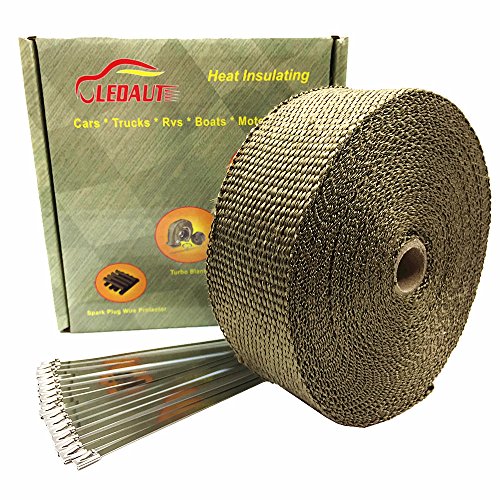
LEDAUT’s 2″ x 50′ titanium wrap is paired with a pack of 16 stainless steel locking ties. The fiberglass-based wrap requires soaking prior to installation to minimize shedding. The product emphasizes ease of securing with stainless ties and overlap-wrapping around exhaust pipes. It’s designed for high resistance to abrasions, oil spills, and heat/vibration stress, making it a practical choice for riders and hot-rods alike. The included guidance warns users to wear gloves to avoid itching from fibers during handling. This wrap suits mid-size exhaust routing with robust heat shielding needs.
Design Engineering Titanium Exhaust Wrap With Lava Rock Technology

This 2″ x 50′ wrap from Design Engineering uses lava rock technology for enhanced durability. The diagonal weave supports wrapping around curves and edges, improving installation ease. It withstands direct heat up to 1800°F and intermittent heat up to 2500°F without pre-wetting. The wrap contributes to reduced under-hood temperatures, maintains exhaust gas velocity, and minimizes heat transfer to the firewall and floor. Aimed at performance-focused builds, it helps prevent heat soak and shields critical components from excessive heat exposure.
ARTR 2″ x 50′ Titanium Exhaust Header Wrap

ARTR’s 2″ x 50′ wrap is designed for universal application and high-heat endurance, resisting 1800°F direct and 2500°F intermittent temperatures. It promotes improved exhaust flow by reducing heat-induced resistance and helps minimize temperature and vibration-related degradation. The product positions itself as a durable alternative to cheaper fiberglass wraps, offering a reliable shield for a range of vehicles, from motorcycles to trucks. Installers can expect consistent performance in demanding exhaust routes while maintaining structural integrity under heat cycling.
LEDAUT 2″x 100′ Titanium Exhaust Heat Wrap

This longer 2″ x 100′ roll by LEDAUT is designed for larger projects or longer exhaust runs. It includes 16 locking ties and follows the same installation guidance: soak before wrapping, overlap for secure layering, and use stainless ties to close the ends. The wrap emphasizes high resistance to abrasions, oil spills, and heat/vibration. For owners upgrading extended exhaust layouts or custom builds, the extended roll reduces the need for splices and offers a streamlined installation workflow, balancing coverage with reliability.
Design Engineering Titanium Exhaust Heat Wrap Kit

The Design Engineering kit bundles two 2″ x 50′ titanium wraps with 12 locking ties and a locking tie tool. This package caters to builders seeking a complete installation solution with a ready-to-use tie toolkit. The wrap’s titanium composition supports high-temperature applications, ensuring durable heat shielding that protects nearby components and helps sustain exhaust gas velocity. The kit is suitable for both professionals and DIY enthusiasts working on multi-piece exhaust systems that require precise wrap timing and secure anchoring.
Buying Guide: Titanium Exhaust Heat Wraps
Key factors influence the choice of titanium exhaust heat wrap, from temperature handling to installation convenience. Consider these perspectives to select a wrap that fits your vehicle, climate, and goals:
- Temperature tolerance: Direct heat endurance typically ranges up to 1800°F with intermittent peaks around 2500°F. Choose a wrap that matches or exceeds the exhaust system’s heat profile to avoid premature degradation.
- Material composition: Titanium and lava rock blends offer strong thermal resistance and durable weaves. Lava rock technology can improve abrasion resistance and heat dissipation in demanding applications.
- Wrap width and length: Wider wraps reduce the number of wraps required, while longer rolls minimize joints and splices. For tight bends and complex routing, a pliable weave is advantageous.
- Installation needs: Some wraps require soaking before installation and come with stainless locking ties. Tools like locking-tie kits can simplify securing the ends and maintaining wrap integrity.
- Durability and protection: A high-resistance wrap helps shield wiring, hoses, and interior components from heat soak, contributing to cooler intake air and better performance stability.
- Fit and scope: Consider whether you need a wrap for a motorcycle, car, truck, or industrial piping. Universal wraps offer flexibility, while kits provide a complete setup with ties and tools.
- Maintenance: Some wraps shed fibers during handling; wearing gloves is advised. After installation, inspect for fraying or loose ties, and re-secure as needed to maintain performance.
In summary, titanium exhaust heat wraps deliver a balance of high-temperature performance, durability, and installation flexibility. The products featured here span compact 50-foot rolls to longer 100-foot options, as well as complete kit configurations. When choosing, align the wrap’s temperature ratings with your exhaust system’s heat load, consider how easily you can secure and seal joints, and ensure compatibility with your vehicle’s routing and space constraints.