Finding the right water tank for a trailer tongue setup means balancing capacity, durability, and installation options. The following five products represent a range of capacities and designs—from compact 16–19 gallon units to larger 41–57 gallon tanks—that are commonly used in RVs, campers, and trailers. Each option emphasizes potable water suitability, ease of installation, and compliance with industry standards to support reliable on-the-road hydration, cooking, and cleaning needs.
Summary Table
| Product | Capacity | Use Case | Key Benefit |
|---|---|---|---|
| Ameri-Kart WT-5450 | 19 gal | RV, trailer, camper water storage | USA-made, BPA-free, multiple installation fittings |
| Ameri-Kart WT-5553 | 57 gal | Large RVs and long trips | High capacity, same durable construction |
| YITAHOME 19.8 gal Tote | 19.8 gal | Portable water holding for on-the-go use | Built-in handle, wheels, level indicator |
| Ameri-Kart WT-5545 | 16 gal | Compact trailer tongue installation | Lightweight with dual fittings |
| Class A Customs 41 gal WT | 41 gal | Concession and RV use | NSF-approved materials, versatile mounting |
Ameri-Kart 19 Gallon RV Fresh Water Tank

The Ameri-Kart WT-5450 is a compact 19-gallon fresh water tank designed for potable water use in RVs, campers, trailers, and motorhomes. It is made in the USA from BPA-free materials and supports multiple installation options thanks to its built-in fittings, including two 1.5″ balloon-style NPT and two 0.5″ NPT ports. The tank is built for durability with weather and impact-resistant plastics, ensuring sanitation and leak resistance. It meets IAPMO standards for safe drinking water storage.
Ameri-Kart 57 Gallon RV Fresh Water Tank

The WT-5553 57-gallon tank from Ameri-Kart provides a larger reservoir for longer trips or higher usage while maintaining potable water safety. Constructed from BPA-free materials, it is suitable for drinking, cooking, cleaning, showering, and dishwashing in RVs and trailers. As with other Ameri-Kart tanks, it offers flexible installation with multiple fittings and is designed to be sanitary and leak-proof, meeting IAPMO standards for water storage.
YITAHOME 19.8 Gallon Portable Water Tank

The YITAHOME 19.8-gallon tank is a portable solution designed for RVs and trailers needing flexibility. It features a built-in handle and large universal wheels to enable easy transport, along with multiple water outlets to simplify filling and draining. A level indicator helps prevent overflows and ensures you know when the tank needs to be emptied, making it a practical option for remote or seasonal setups.
Ameri-Kart 16 Gallon RV Fresh Water Tank
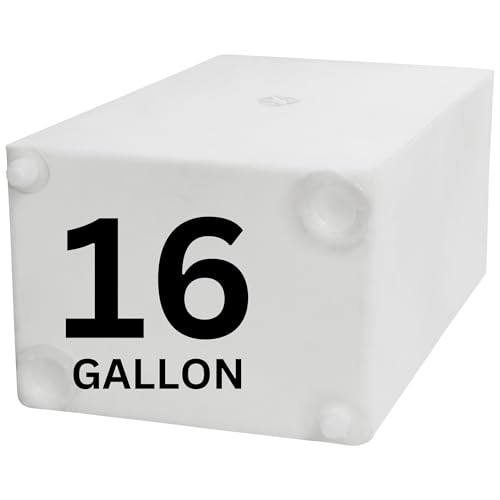
The WT-5545 16-gallon tank offers a compact footprint suitable for smaller trailers or tongue-mounted installations. It uses BPA-free construction and features two 1.5″ balloon-style NPT fittings and two 0.5″ NPT fittings, enabling versatile mounting options. The tank is designed to be sanitary, leak-resistant, and NSF-compliant for safe drinking water in mobile living spaces.
Class A Customs | 41 Gallon Fresh Water Holding Tank

The Class A Customs 41-gallon tank is designed for RVs and concession setups, offering NSF-approved materials suitable for fresh or drinking water. The tank measures around 71 inches long and 10 by 14.625 inches in cross-section; it is designed to sit on its side with fittings all located at one end. It supports flexible mounting configurations and is built to withstand on-road conditions while keeping water safe for consumption and use.
Class A Customs 20 Gallon RV Concession Tank

The 20-gallon RV concession tank comes with a plumbing kit and a 12-volt water pump, expanding its usefulness for mobile beverage service or auxiliary freshwater storage. It features built-in fittings, non-pressurized operation, and guidance on proper venting and filling to prevent damage. It is intended for fresh water use or specific non-potable applications in mobile setups requiring compact, reliable storage.
Buying Guide: Key Considerations For Trailer Tongue Water Tanks
- Capacity and usage pattern — Choose capacity based on trip length, number of occupants, and whether you prioritize fewer fills or more on-site flexibility. Portable units add mobility, while fixed tanks maximize storage in limited space.
- Material and safety — Look for BPA-free materials and NSF/IAPMO compliance to ensure potable water safety. Durable plastics resist weather and impact, reducing risk during travel.
- Installation options — Check inlet/outlet fittings (NPT sizes, locations, and sealing) to match your trailer’s plumbing layout. Tanks with multiple fittings offer flexible mounting angles and placements.
- Maintenance and cleanliness — Sanitary design, leak-proof construction, and accessible fittings simplify cleaning and prevent contamination. A tank with a level indicator helps manage water use and avoid overflows.
- Portability vs. capacity trade-off — Portable tanks like the YITAHOME model provide flexibility for seasonal or multi-vehicle storage, but fixed tanks deliver larger volumes with consistent installation in a tongue area.
- Weight and space — Larger tanks add weight and occupy more space. Ensure your trailer frame and hitch area can bear the load and that installation does not interfere with other systems.
- Ventilation and venting requirements — Some tanks require venting to prevent pressure buildup; follow manufacturer guidance to avoid damage or leaks during use.
Install And Compatibility Tips
- Plan fittings before mounting: Map out all inlet, outlet, and vent positions to minimize hose clutter and ensure watertight connections.
- Use compatible hoses and clamps: Match hose inner diameter to the tank fittings and select corrosion-resistant clamps to maintain a secure seal.
- Consider heat exposure: Place tanks away from heat sources and sun exposure to minimize expansion, material fatigue, and bacterial growth.
- Water sanitation: If using for drinking water, consider a secondary filtration or treatment method as needed, and flush the system before use after storage periods.
- Maintenance schedule: Inspect fittings and seals regularly, particularly after journeys over rough terrain, to catch leaks early and extend tank life.