Answering the demand for mobile cooling, these van rooftop air conditioners are selected for off-grid RVs, camper vans, and work trucks. They’re best for off-grid travelers, full-time van dwellers, or anyone needing quiet, compact cooling on the go. The list prioritizes units that balance power efficiency, low profile design, and reliability in small spaces. Use this guide to compare capabilities, battery considerations, and installation needs across five top options.
Summary Table of Chosen Products
| Product | BTU | Best For | Notes |
|---|---|---|---|
| OutEquip Pro 12V 10000 BTU (No Heater) | 10,000 | Off-grid RVers needing extended runtime | Battery-powered; durable, weather-resistant |
| OutEquip 12V 10000 BTU (With Heater) | 10,000 | Mild climates with light heating needs | Includes 4,500 BTU heater |
| Aspligo 8000 BTU Roof AC | 8,000 | Compact vans and tight roof openings | Thin body; remote control |
| iRooVee 11000 BTU 12V with Heat | 11,000 | Cross-country travelers needing both cooling and heating | Quiet operation; off-grid battery friendly |
| Countrymod 10000 BTU Low Power (App Remote) | 10,000 | Energy-conscious setups with app control | Inverter design; battery-efficient |
OutEquip RV Air Conditioner Pro 12V 10000 BTU (No Heater)

Best for long off-grid periods, this 12V model delivers robust cooling quickly. It runs off the vehicle battery and claims up to 8 hours of cooling on a 12V 480Ah battery, extending to 10 hours with a 600Ah setup when parked. It features UV-stabilized ABS construction, EPDM foam gasket, and a zinc-coated condenser for weather resistance. Suitable for RVs, vans, trucks, and campers that prioritize extended battery life and dependable performance in varying weather. Not ideal if heater functionality is required in cold seasons.
Who it’s best for: Off-grid travelers who prioritize long runtime and rugged build. Choose this if your power system is sized for 480–600Ah and you want a reliable, heater-free cooling option.
One caution: It lacks built-in heating, which means you’ll need a separate heating solution for cold conditions.
OutEquip RV Air Conditioner with Heater 12V 10000 BTU
This model adds a 4,500 BTU PTC heater, making it a better pick for regions with cooler nights or shoulder seasons. It shares the core benefit of quick cooling within about 15 minutes and weather-resistant construction. Best for campers who need occasional supplementary heat without running a separate heater. The heater is not designed as a primary heat source in extreme cold or large spaces.
Who it’s best for: Van-life travelers who want cooling plus a built-in heater for transitional weather. Choose this if you operate in mixed temperatures and want one unit to cover both needs.
One caution: The heater’s effectiveness is limited in very cold or large spaces; you may still need an alternative heat source for extreme conditions.
Aspligo 8000BTU Roof DC RV Air Conditioner

Aspligo’s 8000 BTU unit is designed for thinner profiles and lighter roof openings. The 7-inch thick body helps maintain lower vehicle height while delivering solid cooling, aided by a remote control for easy adjustments from inside the cab. It is suited for smaller vans, camper vans, or trailers where roof clearance is limited. Best for space-constrained installations; consider this when roof cutouts are tight.
Who it’s best for: Van owners with limited roof height who still want reliable cooling. Choose this if your roof opening is modest and you value a remote-controlled experience.
One caution: Its 8,000 BTU rating may be less sufficient for very hot climates or larger RV footprints.
iRooVee 11,000 BTU 12V Rooftop AC With Heat

iRooVee combines 11,000 BTU cooling with 3,500 BTU heating, aiming at travelers who need a broad climate range from desert heat to mountain cold. It emphasizes rapid cooling and heating within minutes and quiet operation—about 45 dB in typical use. Battery-powered operation is feasible with 12V battery packs, offering a practical off-grid solution for longer trips or remote campsites.
Who it’s best for: Cross-country travelers who require both cooling and heating and prioritize quiet operation. Choose this if you want an all-in-one unit that handles wide temperature swings.
One caution: Heater energy usage can be significant; ensure your battery bank supports combined cooling and heating demands when off-grid.
Countrymod 12V DC RV A/C 10000 BTU (APP Remote) Black
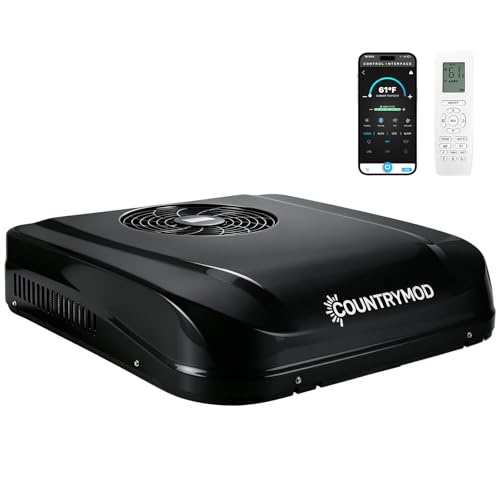
Countrymod’s 10000 BTU unit emphasizes inverter-driven efficiency with a 300–900W design and app remote control. The variable-frequency operation helps tailor cooling on demand and conserve battery life, with energy consumption cited at about 0.3 kWh per hour in concept. It’s designed to deliver comfortable cooling while extending battery runtime for off-grid setups. Best for tech-friendly users who want remote monitoring and control.
Who it’s best for: Tech-savvy van owners seeking efficient, app-controlled cooling with flexible inverter operation. Choose this if you value battery economy and smart control integration.
One caution: Verify roof opening and wiring compatibility for inverter-driven systems to avoid installation surprises.
Buying Guide: Key Considerations For Van Rooftop ACs
- Power source and battery needs: Most 12V rooftop ACs rely on the vehicle battery. Plan for a dedicated secondary battery (or an appropriate high-capacity pack) if you want extended cooling without engine running.
- Cooling capacity vs. space: Higher BTU units cool faster but may be larger and louder. For small vans, 8,000–10,000 BTU models often best balance performance and footprint.
- Heater inclusion: If you need heating, choose models that include an auxiliary heater. Evaluate whether the heater is suitable for your climate and space size.
- Energy efficiency: Look for inverter-based or variable-frequency designs to save energy and extend runtime on battery power.
- Noise level: Quieter operation improves sleep and onboard comfort. Check decibel ratings where available and consider installation to minimize vibration.
- Roof opening and installation: Measure roof dimensions and ensure the unit’s footprint and required opening fit your van’s roof. Check mounting hardware compatibility with your roof material.
- Weather resistance: Durable enclosures, UV-stabilized plastics, gasket quality, and corrosion-resistant condensers enhance longevity in outdoor environments.
- Remote control and app integration: If you value convenience, prioritize models with remotes or app-based control for easier adjustments from inside the vehicle.
- Maintenance: Consider ease of service, availability of spare parts, and expected service intervals for optimal uptime on the road.
FAQ
- Which van rooftop AC is best for off-grid use?
Units advertised as battery-powered with extended runtime (10–12 hours on large 12V battery banks) are ideal for off-grid days without engine idling.
- Do these units require solar panels?
Solar panels are optional but can supplement battery power. Their benefit increases with higher battery capacity and energy-efficient models.
- Is a heater necessary in all climates?
No. Heater-equipped models help in mild shoulder seasons, but some regions may require additional heating if winters are severe.
- What should I consider for roof installation?
Check opening size, weight, and mounting requirements. Ensure you have proper roof reinforcement and weather sealing for a leak-free install.
- Can these units cool large vans?
BTU rating should align with space volume. For very large vans or high-heat climates, consider higher BTU models or multiple units.
- Do all units include remote control?
Many include remotes; some offer app control. If convenient control from inside the cab is important, verify this before purchase.