Answering the demand for reliable TPMS (Tire Pressure Monitoring System) sensors, this guide highlights five solid options for drivers seeking accurate tire pressure data, easier maintenance, and compatibility with GM, Ford, and other popular vehicles. These sensors are best for shoppers who want pre-programmed or easily relearned units that minimize installation hassles and service time. Whether you drive a Silverado, Tahoe, Mustang, or Bronco, these choices are aimed at simplifying tire pressure monitoring and improving road safety.
| Product | Brand | Best For |
|---|---|---|
| TPMS Sensor, GM 315Mhz (4 Pack) | CDWTPS | GM vehicles after 2006; easy install with no programming required |
| CARORAV TPMS Sensor GM, 4-Pack | CARORAV | GM lineup including Buick, Cadillac, Chevy, GMC; many OE parts matched |
| A-Premium 4PCS Pre-programmed TPMS Sensor (315MHz) | A-Premium | Ford and Lincoln models; strong fitment for many Ford vehicles |
| Masoll TPMS Sensor for GM, 4-Pack | Masoll | GM vehicles; dual-antenna design for broad compatibility |
| Yikesai 4-Pack GM TPMS Sensors 315MHz | Yikesai | GM vehicles; plug-and-play replacement with OE-style references |
TPMS Sensor, GM 315Mhz: 4-Pack for GM Vehicles
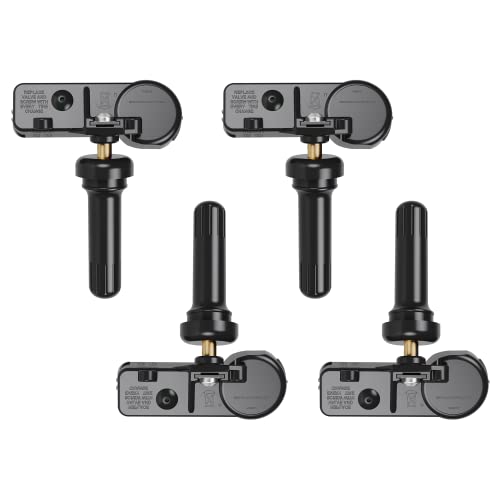
The CDWTPS GM 315Mhz TPMS sensors are designed as a direct replacement for GM vehicles manufactured after 2006, including GMC, Chevy, Buick, Cadillac, and more. They come in a 4-pack for convenient multiple-wheel replacement. Best for drivers who want a ready-to-install option with no programming required. A potential limitation is that some vehicles may still require a quick relearn procedure in certain scenarios.
- Best for GM-branded vehicles after 2006
- No programming required; plug-and-drive in most cases
- Battery life designed for long-term use
CARORAV GM TPMS Sensor, 4-Pack

The CARORAV TPMS sensors are pre-programmed for GM vehicles and cover multiple OE part numbers (including 13598771, 13598772, 13586335, 13581558, and more). They require a relearn or reset operation in some setups. This makes them a strong pick for many GM passenger cars and light trucks that benefit from pre-programmed units with broad compatibility. A caution: some models may require a professional tool to complete relearn steps.
- Best for broad GM model coverage
- Pre-programmed but may need a relearn
- Includes extensive OE number references for compatibility
A-Premium 4PCS Pre-programmed TPMS Sensor (315MHz)

A-Premium’s TPMS sensors are pre-programmed for a wide range of Ford and Lincoln models and come with a robust vehicle fitment listing. They’re designed for easier installation, but Ford and Lincoln vehicles may still require a relearn process using a TPMS tool. Best for Ford and Lincoln drivers replacing OEM sensors with reliable, pre-programmed units. A potential limitation is the need for relearn on certain models after installation.
- Best for Ford and Lincoln vehicles
- Pre-programmed; relearn may be required
- Broad 315MHz compatibility
Masoll GM TPMS Sensor, 4-Pack

Masoll’s GM TPMS sensors feature a dual-antenna design and a long-life battery, aimed at improved signal reliability across GM trucks and SUVs. They’re suitable for a broad GM lineup after 2006. Best for buyers who want strong signal performance and a durable build. Caution: re-learning the sensors with the vehicle ECU is often necessary after installation to ensure proper communication.
- Best for GM trucks and SUVs with robust signal
- Dual-antenna design; long battery life
- Requires relearn for full integration
Yikesai 4-Pack GM TPMS Sensors 315MHz
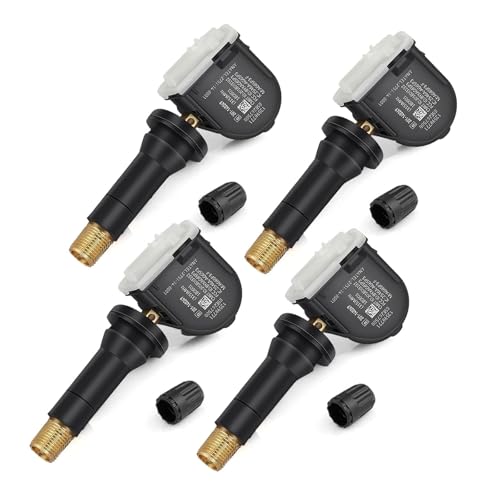
Yikesai’s 4-pack provides a GM-specific TPMS replacement option with references to OE part numbers. This makes it a straightforward choice for replacements on compatible GM models. Choose this if you want a plug-and-play replacement that aligns with common GM part references. A limitation is that some vehicles still require a relearn step after installation.
- Best for straightforward GM replacements
- OE-number referenced compatibility
- Plug-and-play, but relearn may be needed
Buying Guide: Key Considerations For Wheel Air Pressure Sensors
When choosing TPMS sensors, consider vehicle compatibility, frequency (315MHz vs 433MHz), programming needs, and relearn requirements. Pre-programmed sensors save time but may still require a vehicle relearn step. Frequency compatibility is essential to ensure the new sensor communicates correctly with the vehicle’s TPMS module.
- Vehicle compatibility: Confirm year, make, and model. GM vehicles often use 315MHz sensors; Ford and Lincoln frequently use 315MHz sensors as well.
- Programming vs. relearn: Pre-programmed sensors can simplify installation, but a relearn tool or diagnostic scanner may be required for certain models.
- Sensor features: Look for durable batteries, broad OE-number coverage, and dual-antenna designs for stronger signal.
- Installation considerations: Some kits include 4 sensors for a full wheel replacement; others may require professional reprogramming for proper relearn.
Frequently Asked Questions
- What is a TPMS sensor and why replace it?
A TPMS sensor monitors tire pressure and communicates with the vehicle to alert you of under- or over-inflation. Replace sensors when they fail to maintain accurate readings or when they no longer hold a charge. - Do I need to relearn TPMS sensors after installation?
Yes, many sensors, even if pre-programmed, require a relearn or activation procedure to synchronize with the vehicle’s TPMS ECU. - What frequency should I look for?
Most GM and many Ford vehicles use 315MHz or 433MHz sensors. Match the vehicle’s specification to ensure compatibility. - Can I install TPMS sensors myself?
Basic replacement is possible with the right tools and relearn equipment. Some vehicles may require professional service for proper relearn. - Are there any sensors that require no programming?
Some sensors are designed as plug-and-play with no programming, but relearn procedures may still be necessary for full integration. - What should I do if a new sensor isn’t detected after installation?
Initiate the relearn procedure with the vehicle’s TPMS tool or diagnostic scanner and ensure the valve stems are properly seated and the battery is functional.